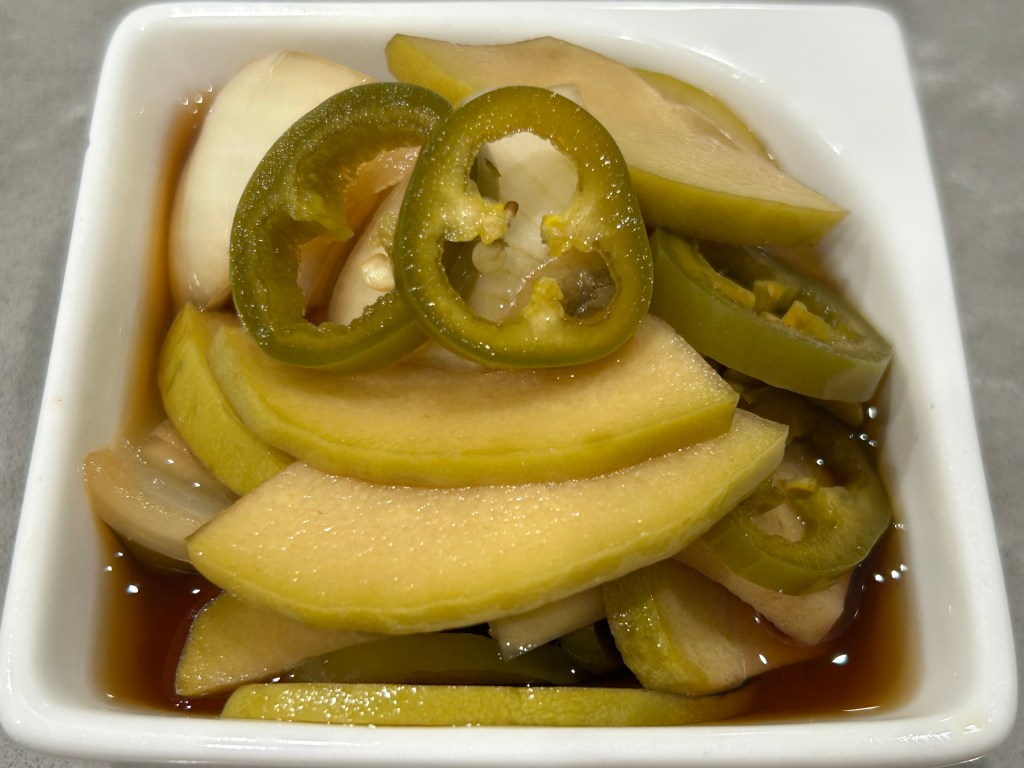
캐나다에 와서 처음 접해보는 야채들이 몇 가지가 있었습니다.
After moving to Canada, I came across a few vegetables I had never seen before.
오늘은 그 중에서 차요테로 장아찌를 만들어 보았습니다.
Today, I decided to make soy sauce pickles (jangajji) with chayote, one of those new discoveries
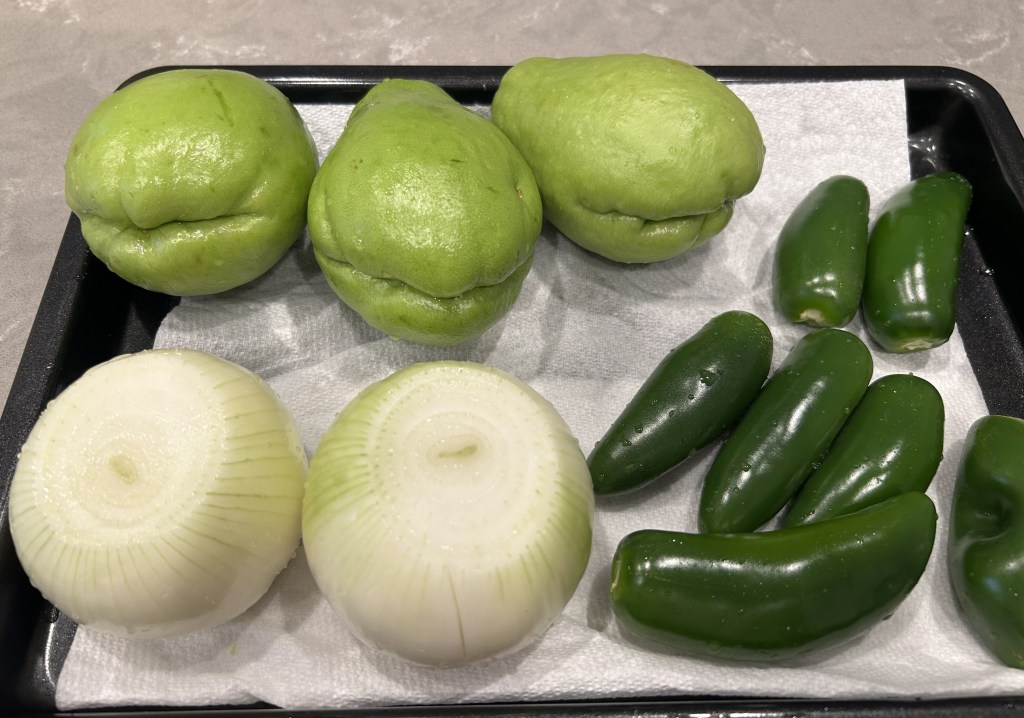
재료 / Ingredients
차요테 3개 (Chayote – 3 pcs)
양파 2개 (Onions – 2 pcs)
할라피뇨 7-8개 (Jalapeños – 7-8 pcs)
물 400ml (Water – 400 ml)
간장 400ml (Soy sauce – 400 ml)
식초 400ml (Vinegar – 400 ml)
설탕 300ml (Sugar – 300 ml)
만드는 방법 / Instructions
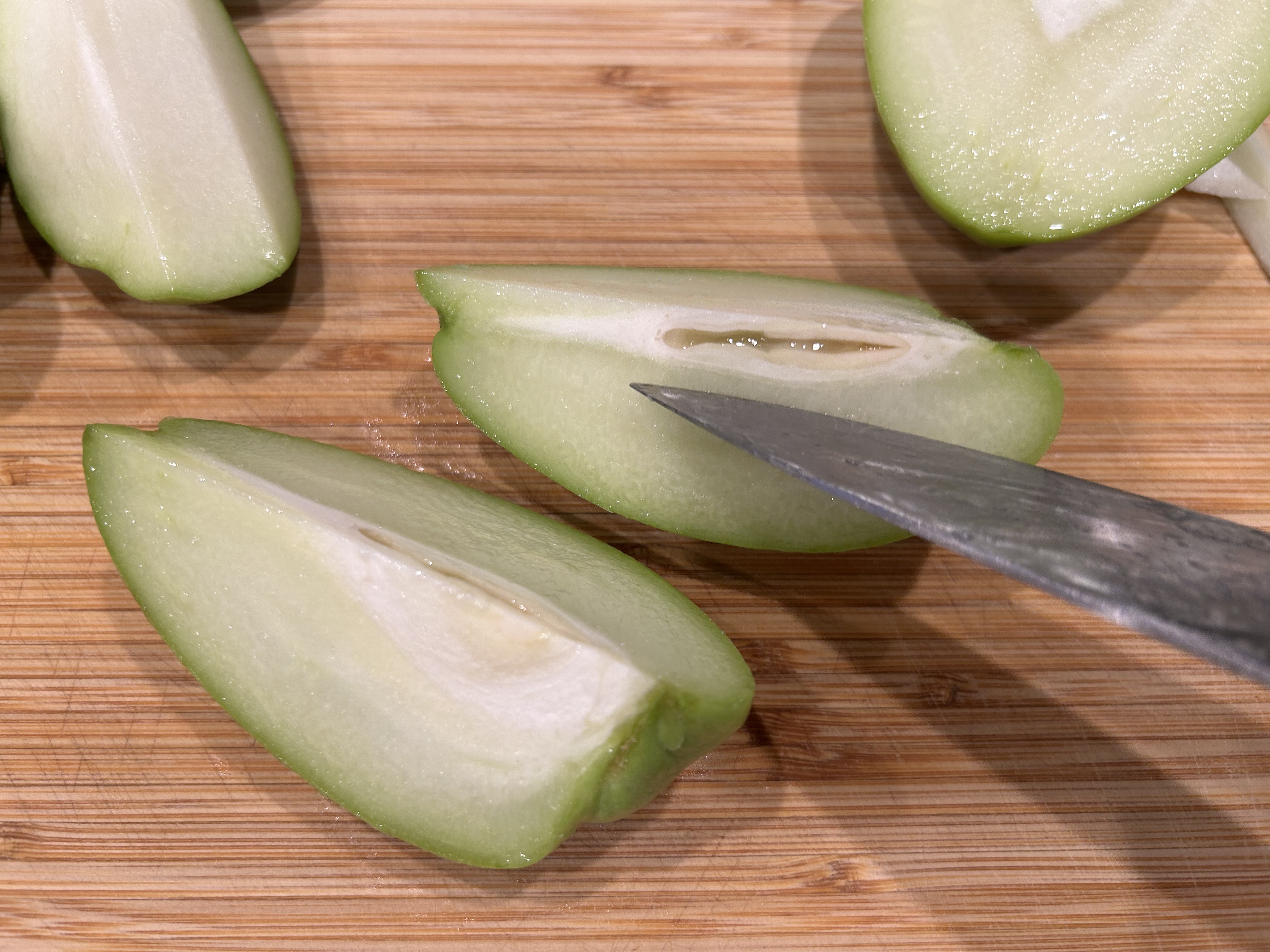
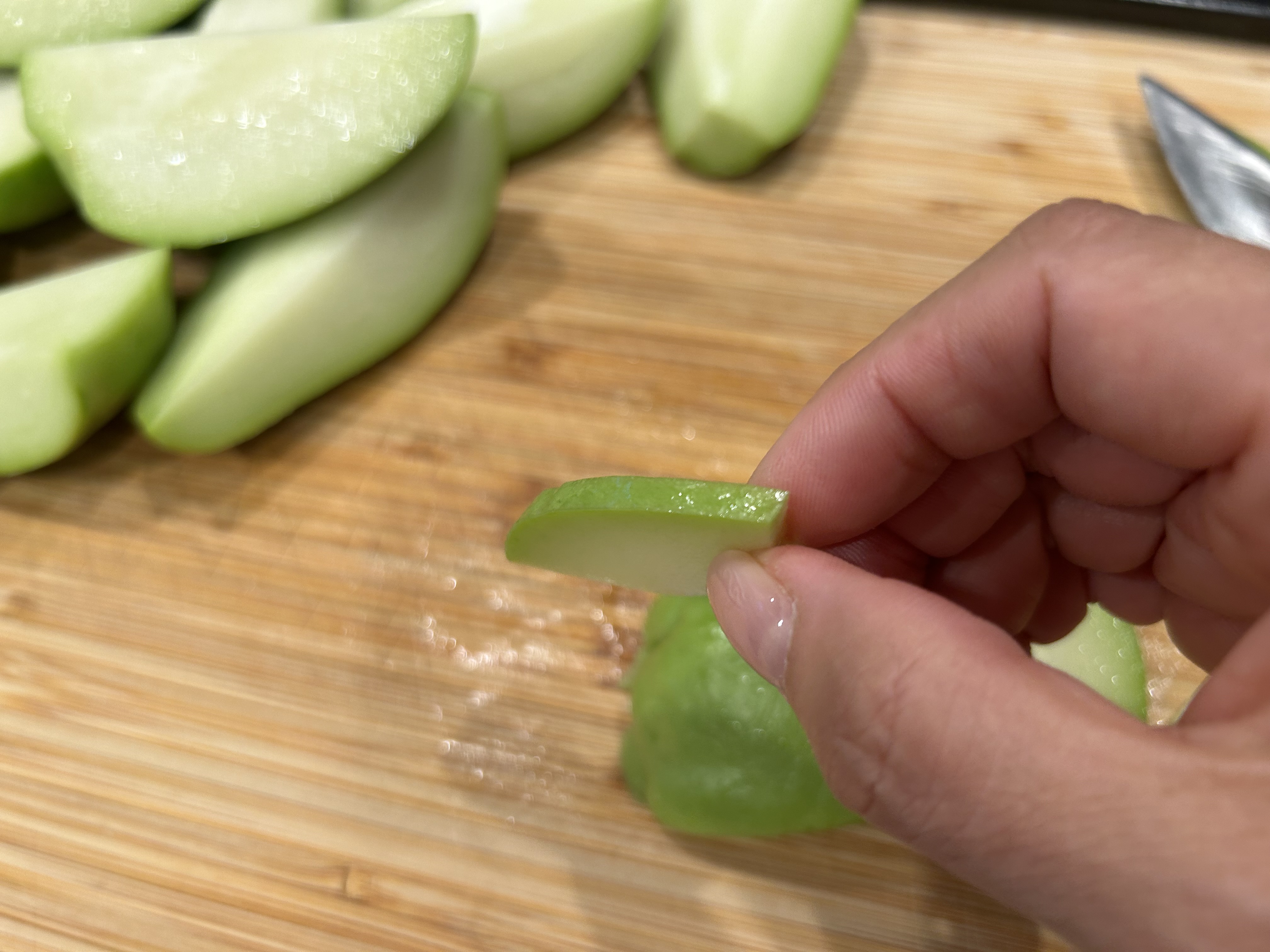
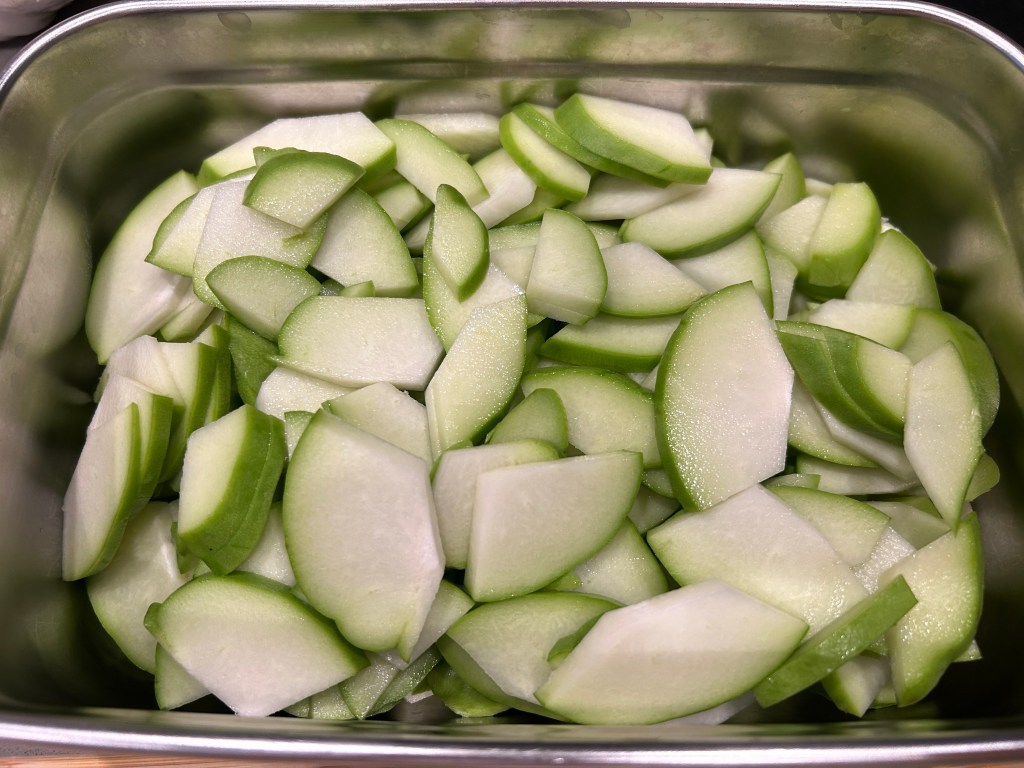
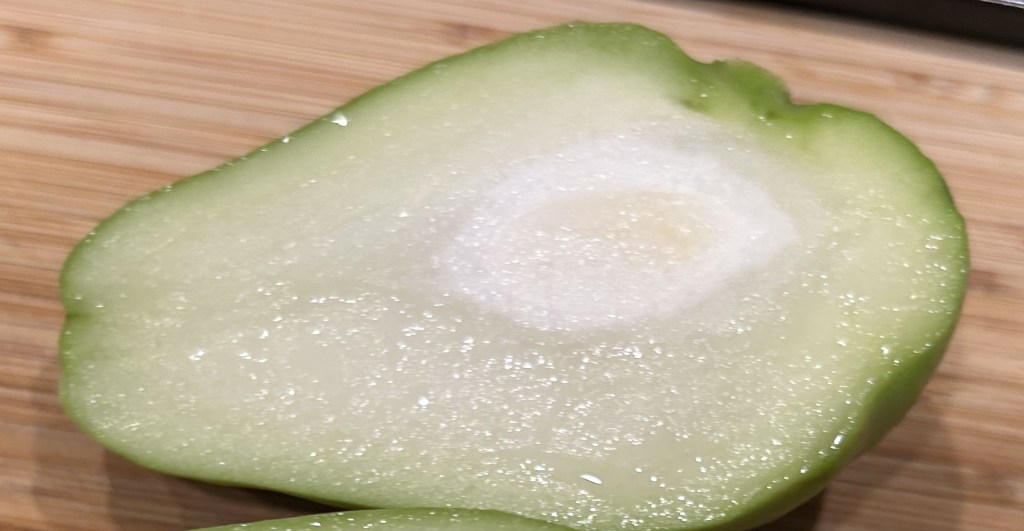
차요테는 반을 갈라서 가운데 부분 씨가 있는 부분을 칼로 오려낸 후 대략 3mm사이즈로 먹기 좋게 잘라줍니다. 너무 굵게 는 자르지 마세요 간장이 잘 베이지 않아요 씹히는 식감도 덜 합니다.
Cut the chayote in half, carve out the core and seeds with a knife, and slice it into bite-sized pieces about 3mm thick. Do not slice them too thick, or the soy sauce won’t absorb well and the crunchiness will suffer.
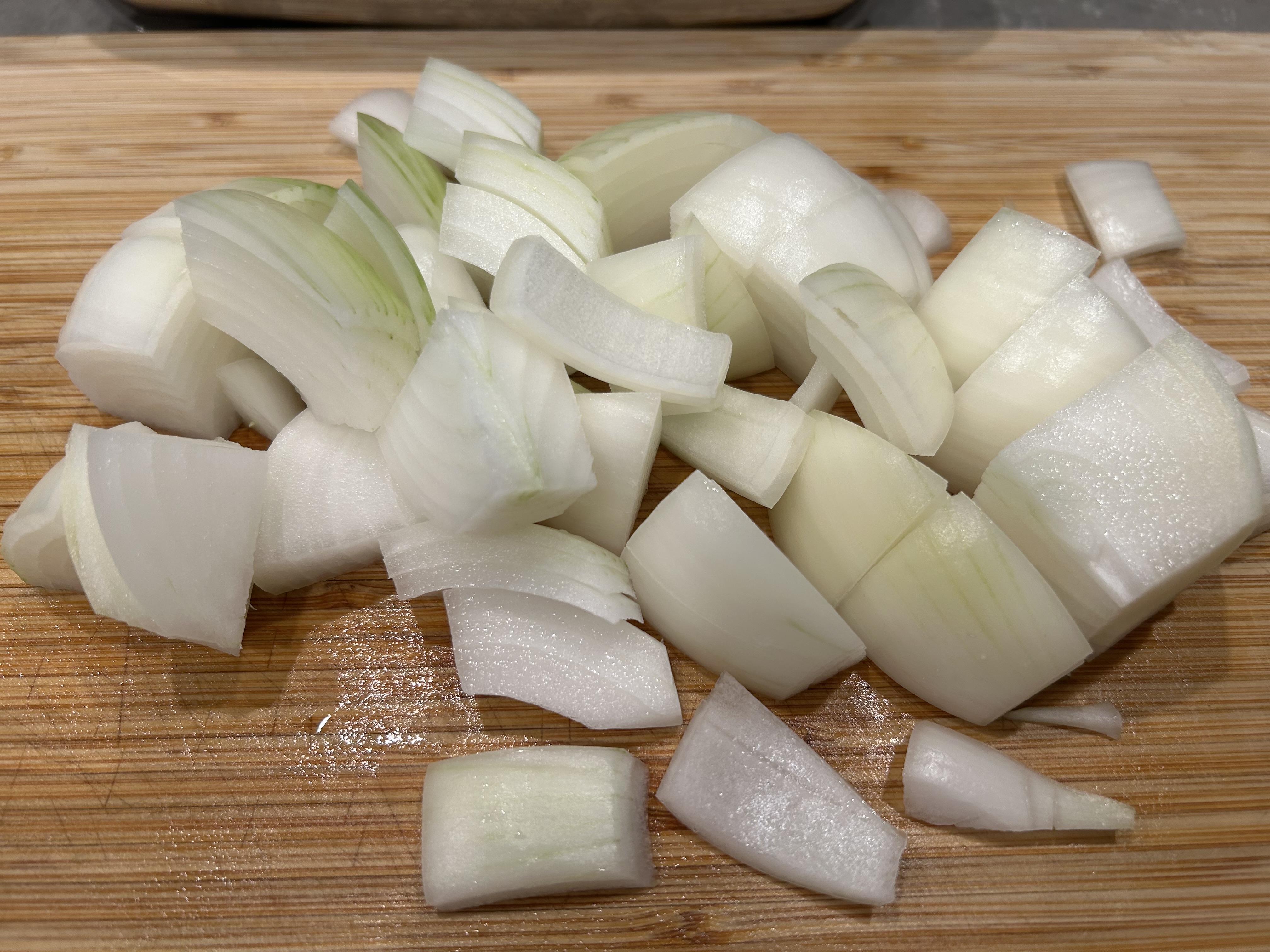
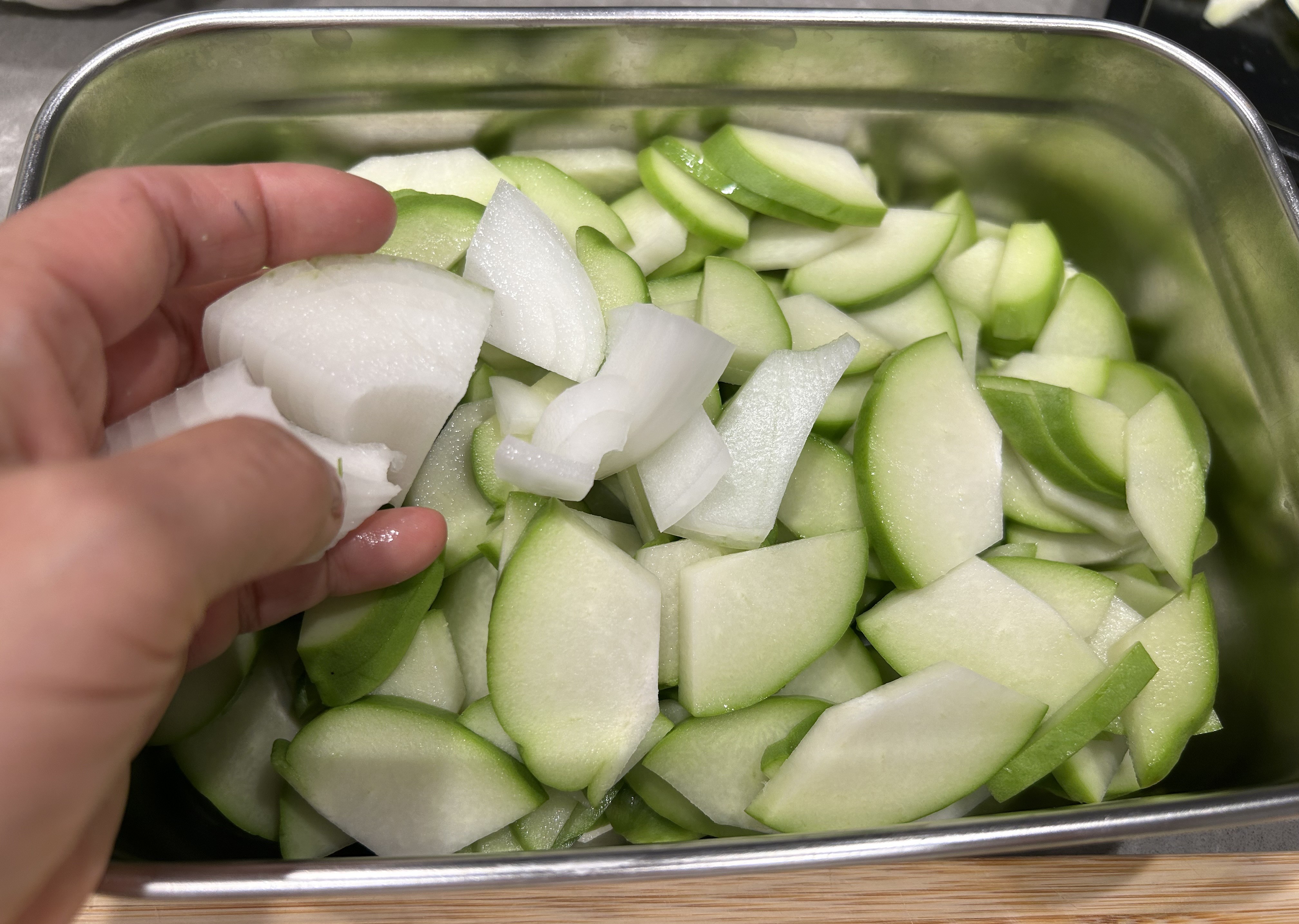
양파도 먹기 좋은 사이즈로 잘라 줍니다.
Cut the onions into bite-sized pieces as well.
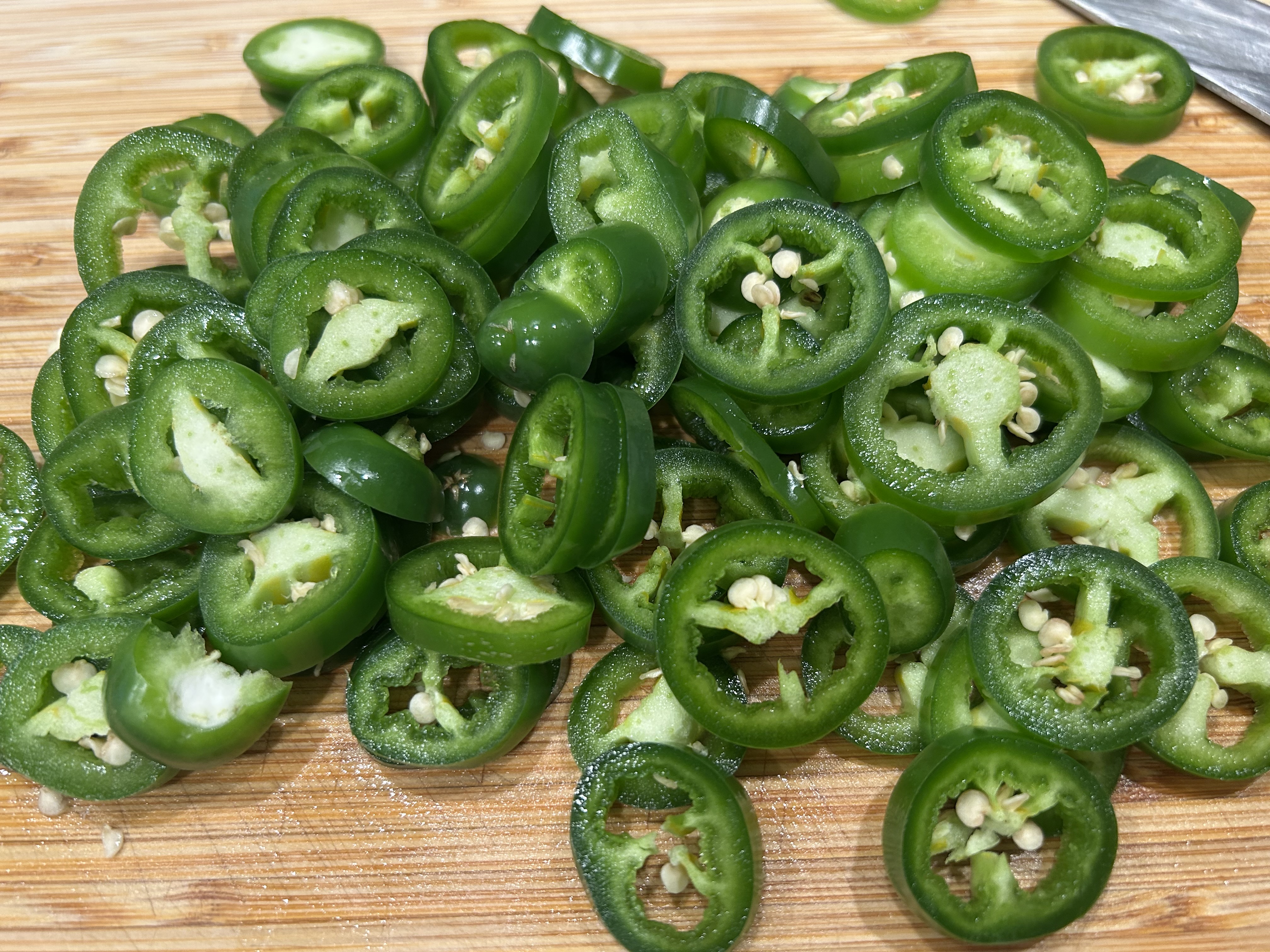
할라피뇨는 대략4mm 정도로 차요테 보다는 조금 굵게 잘라 줍니다. 할라피뇨는 굵어야지 아삭아삭 합니다.
Slice the jalapeños about 4mm thick, slightly thicker than the chayote. Jalapeños need to be cut thicker to keep their nice, crunchy texture.
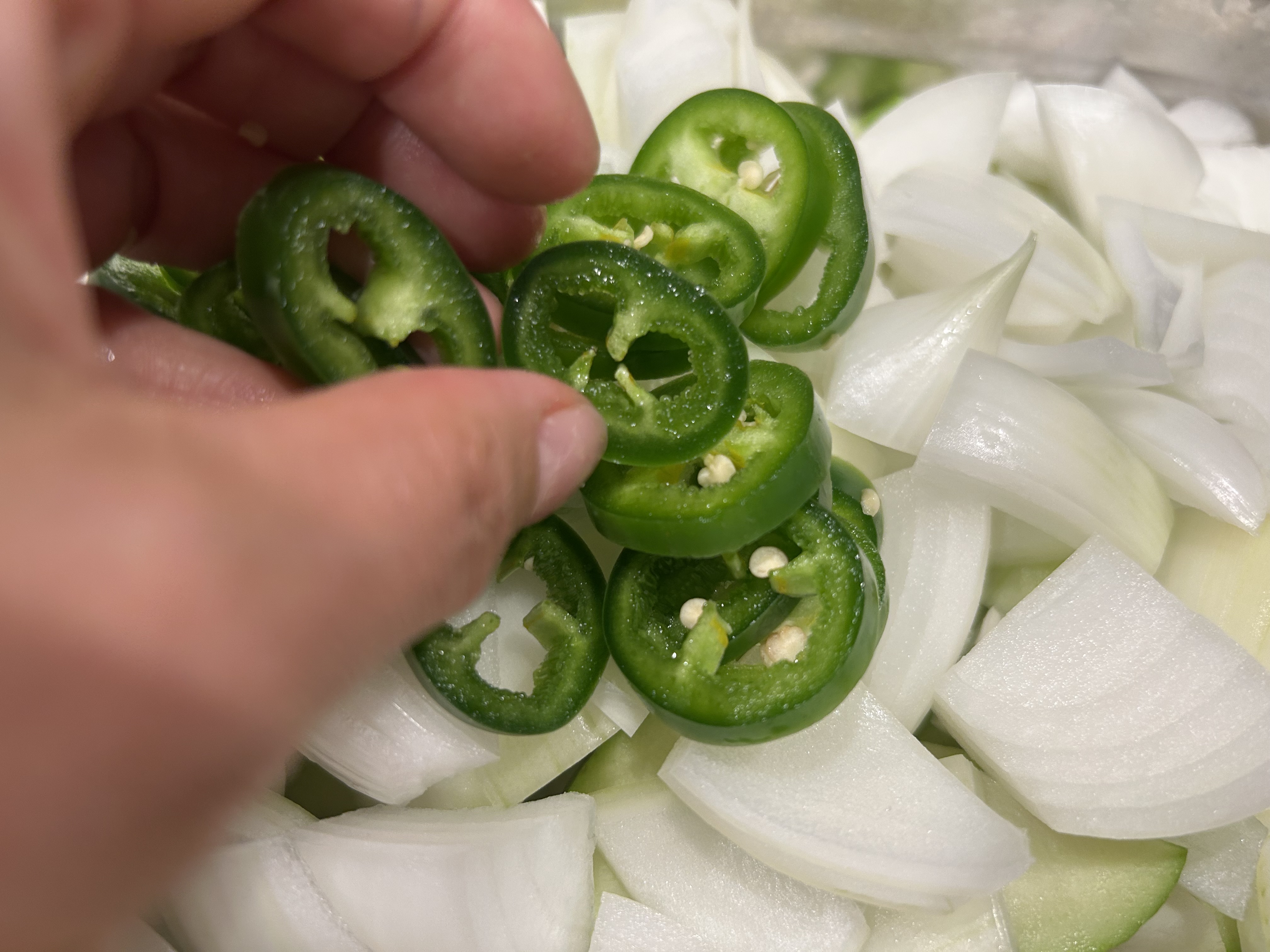
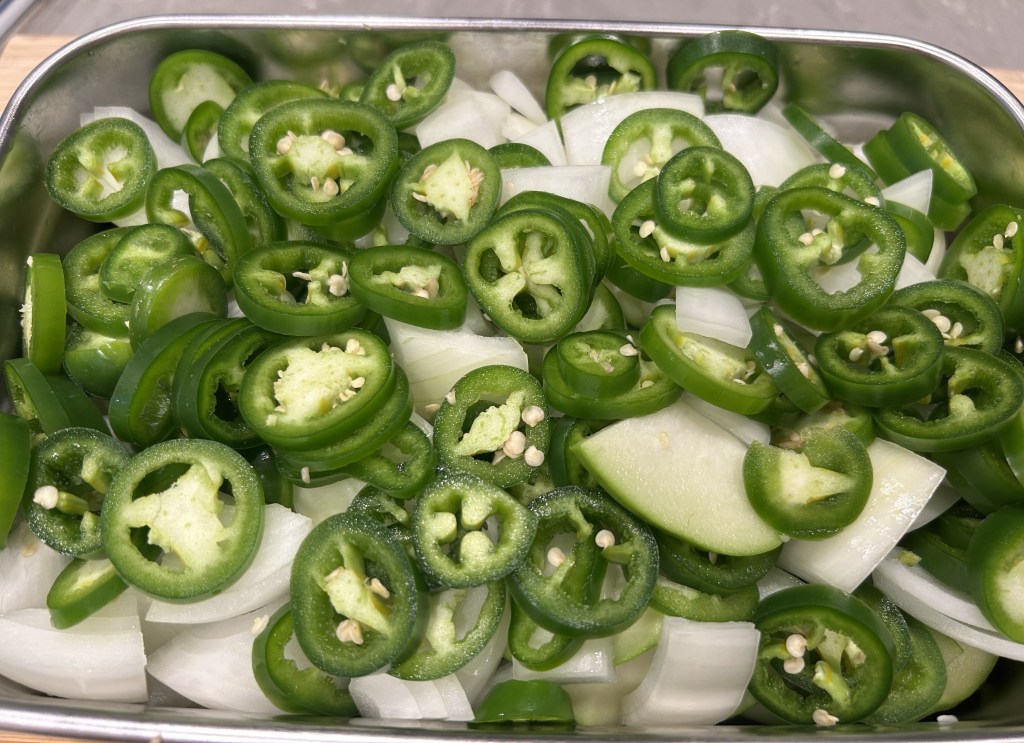
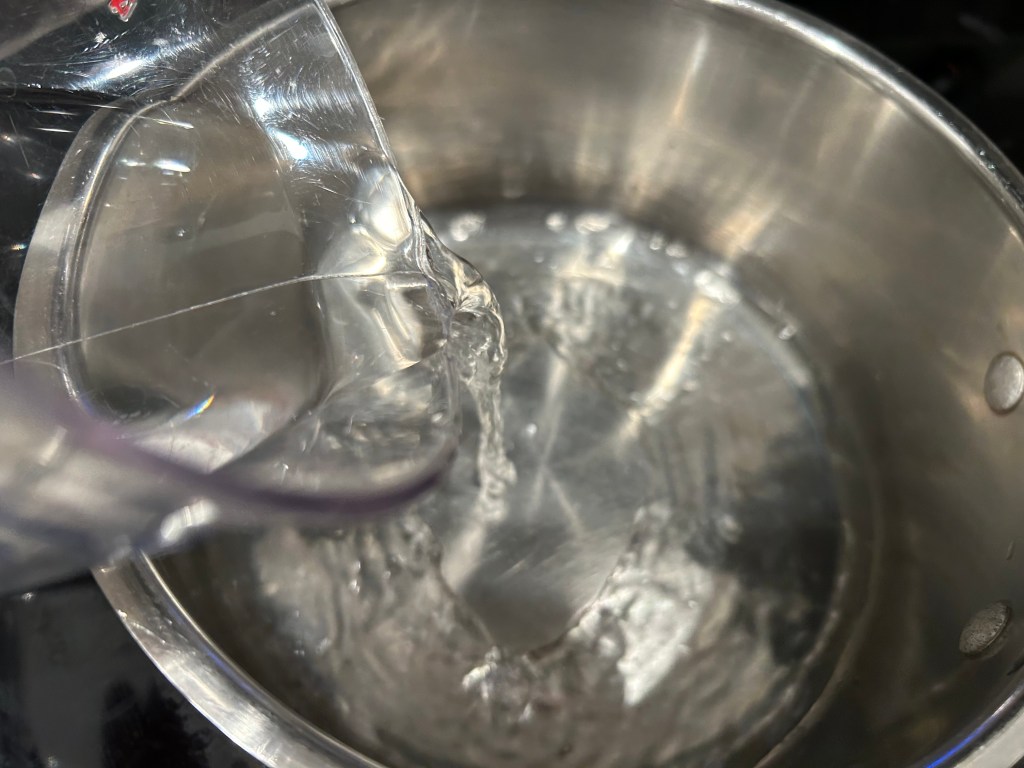
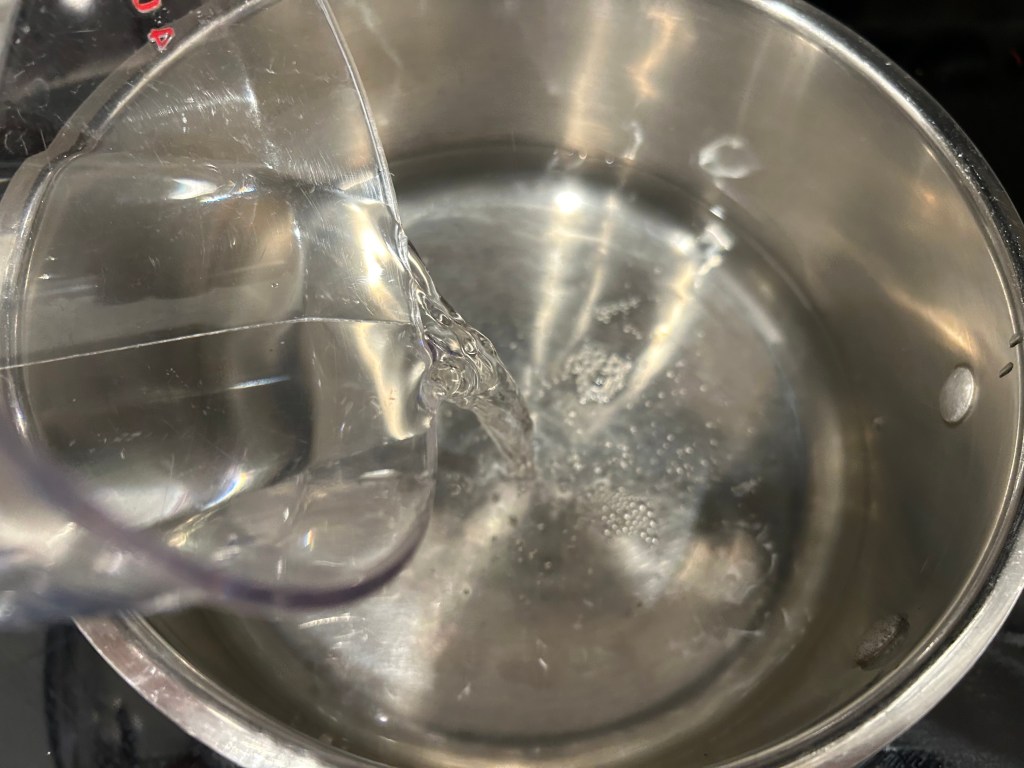
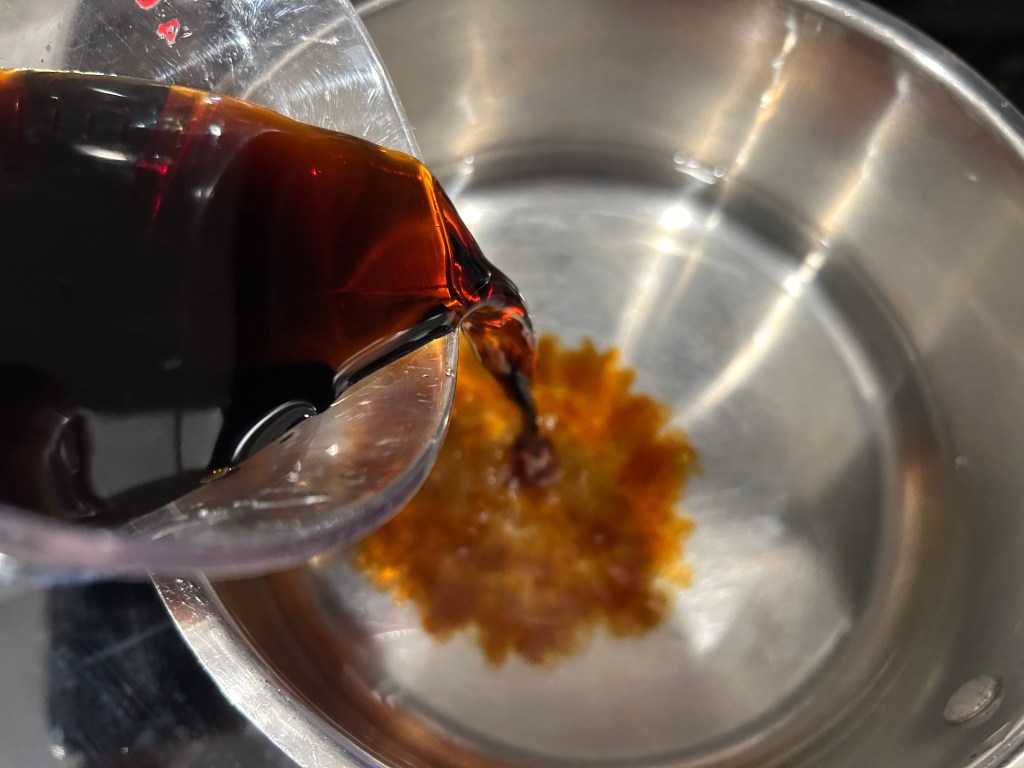
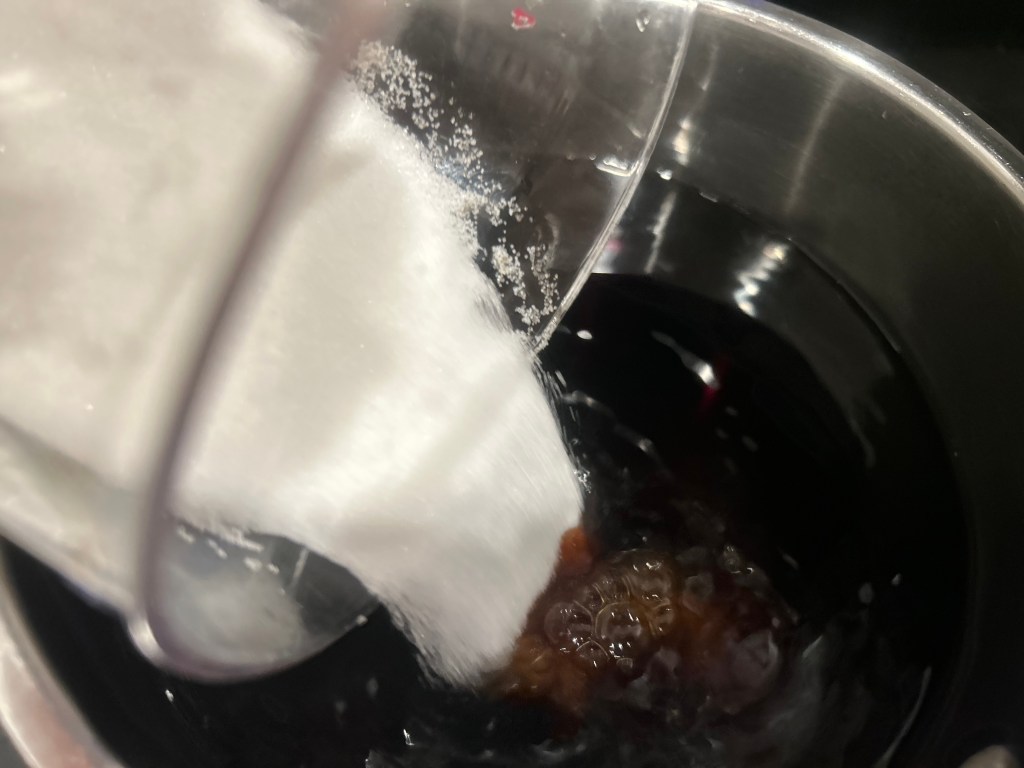
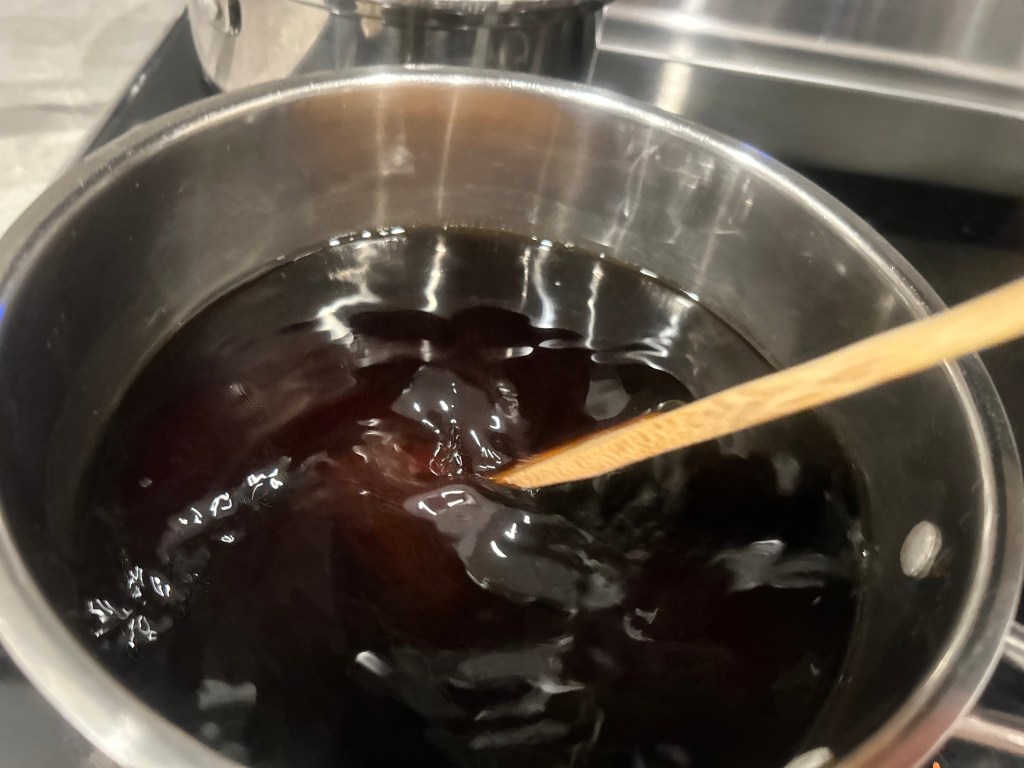
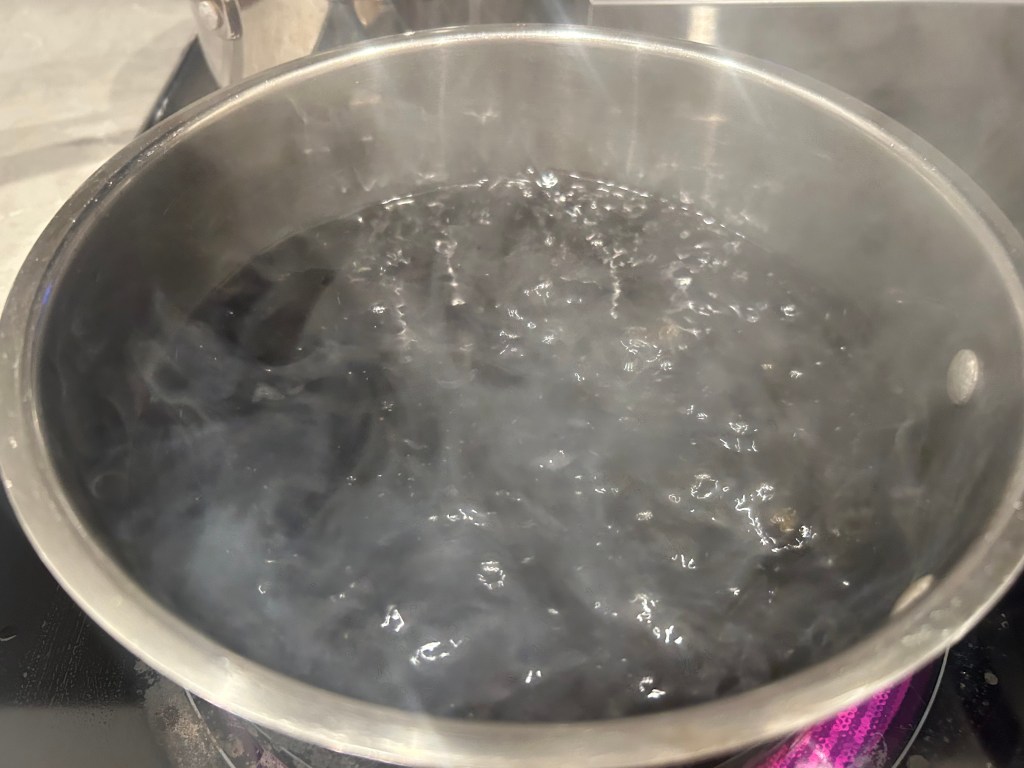
간장물 만들기: 냄비에 물400ml, 식초400ml, 간장400ml, 설탕300ml 를 넣어서 설탕이 녹을 때 까지 잘 저어주어 끓입니다. 끓는다고 바로 사용하면 안되고 끓기 시작하면 조금 더 끓여 온도를 올려줍니다.
Making the Pickling Liquid: Combine 400ml of water, 400ml of vinegar, 400ml of soy sauce, and 300ml of sugar in a pot, stirring well until the sugar dissolves, then bring it to a boil. Do not use it immediately just as it starts boiling; let it boil a little longer to raise the temperature.
썰어 둔 야채 위에 뜨거운 간장 물을 바로 부어줍니다. 뜨거우니 조심해야 합니다.
Carefully pour the hot pickling liquid directly over the sliced vegetables. Please be careful as it is very hot.
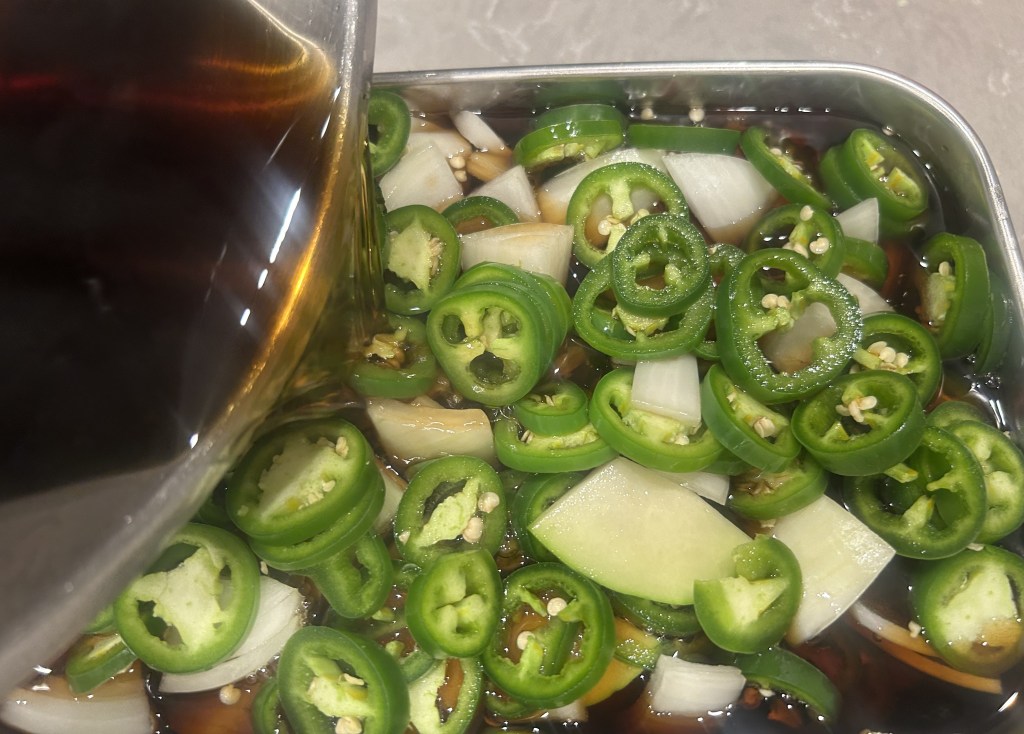
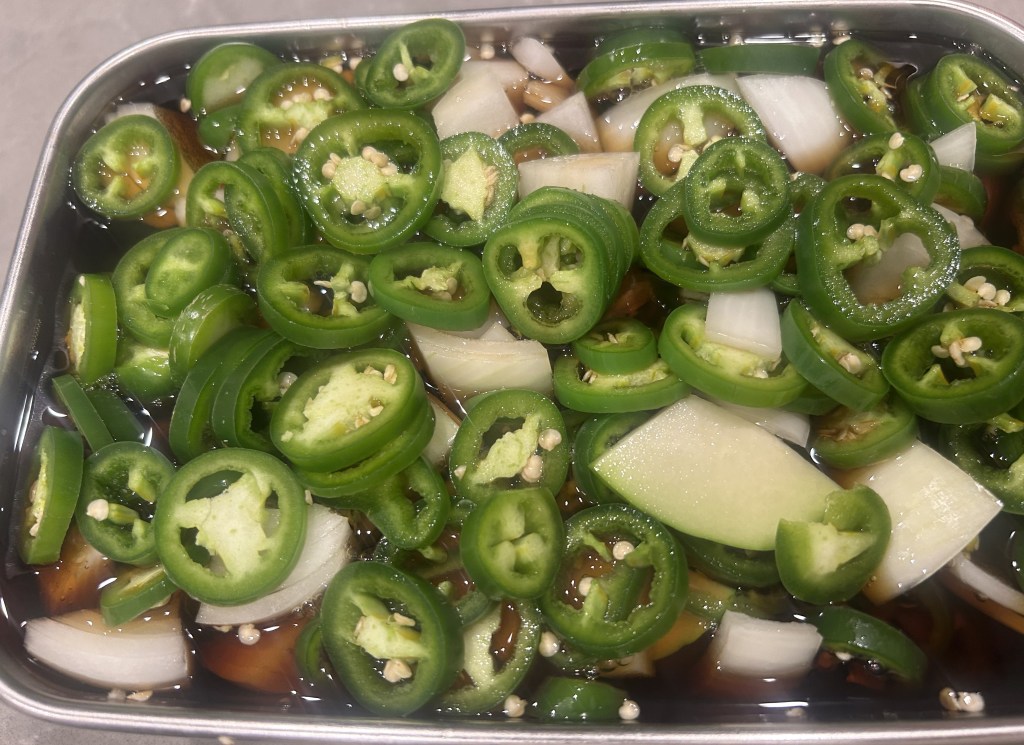
뜨거운 간장 물을 부었다면 야채들이 뜨지 않게 무거운 그릇으로 눌러준 후 뚜껑을 덮어 줍니다.
After pouring the hot pickling liquid, weigh the vegetables down with a heavy dish so they stay submerged, then cover with the lid.
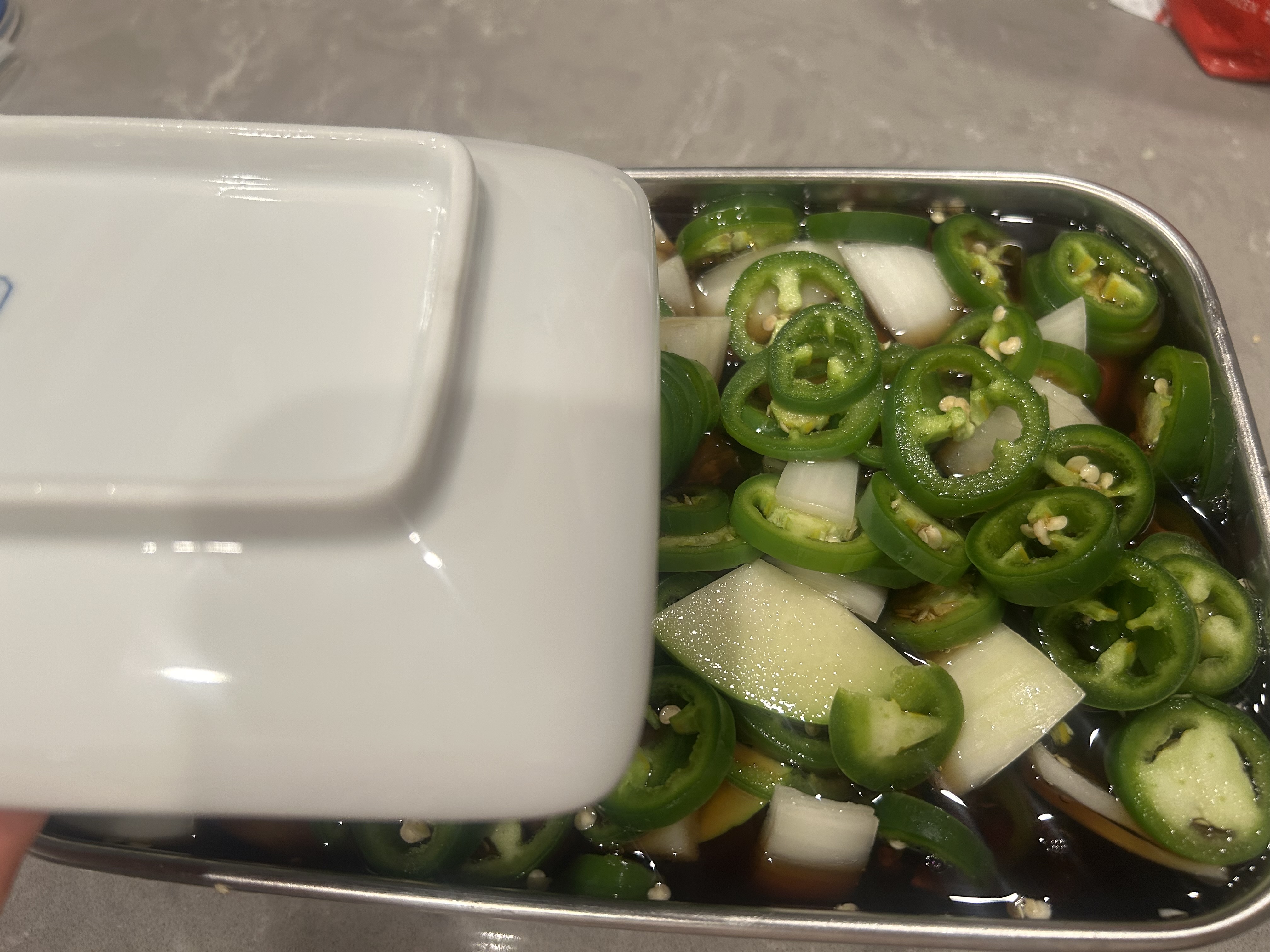
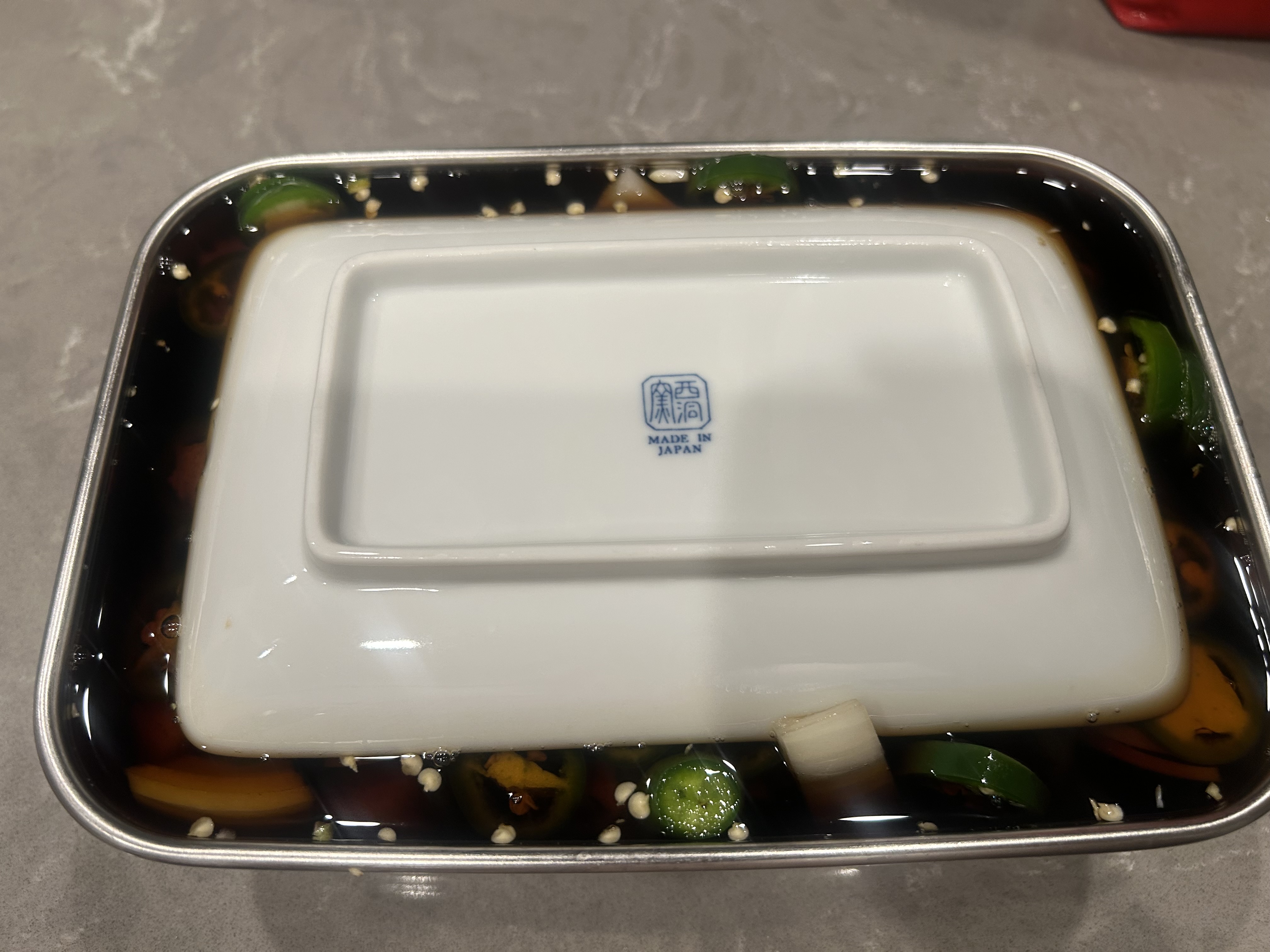
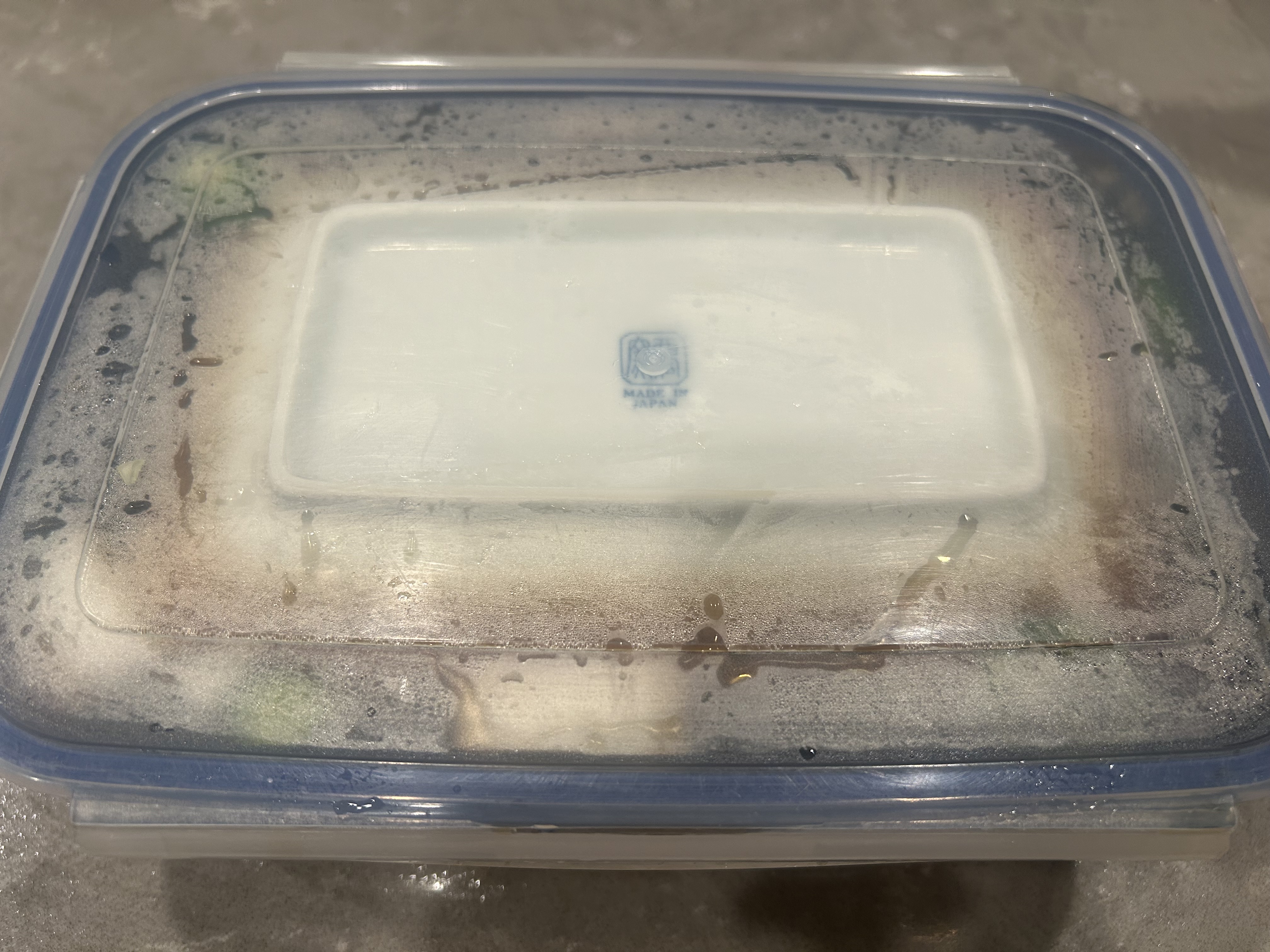
하루 밤 실온에 두었다가 냉장고에 넣어줍니다. 하루가 지나면 언제든지 드시면 되는데 차거울때 더 맛이 있으니 냉장고에 보관해주세요.
Leave it at room temperature overnight, then store it in the refrigerator. You can eat it anytime after a day, but it tastes even better when cold, so please keep it refrigerated.
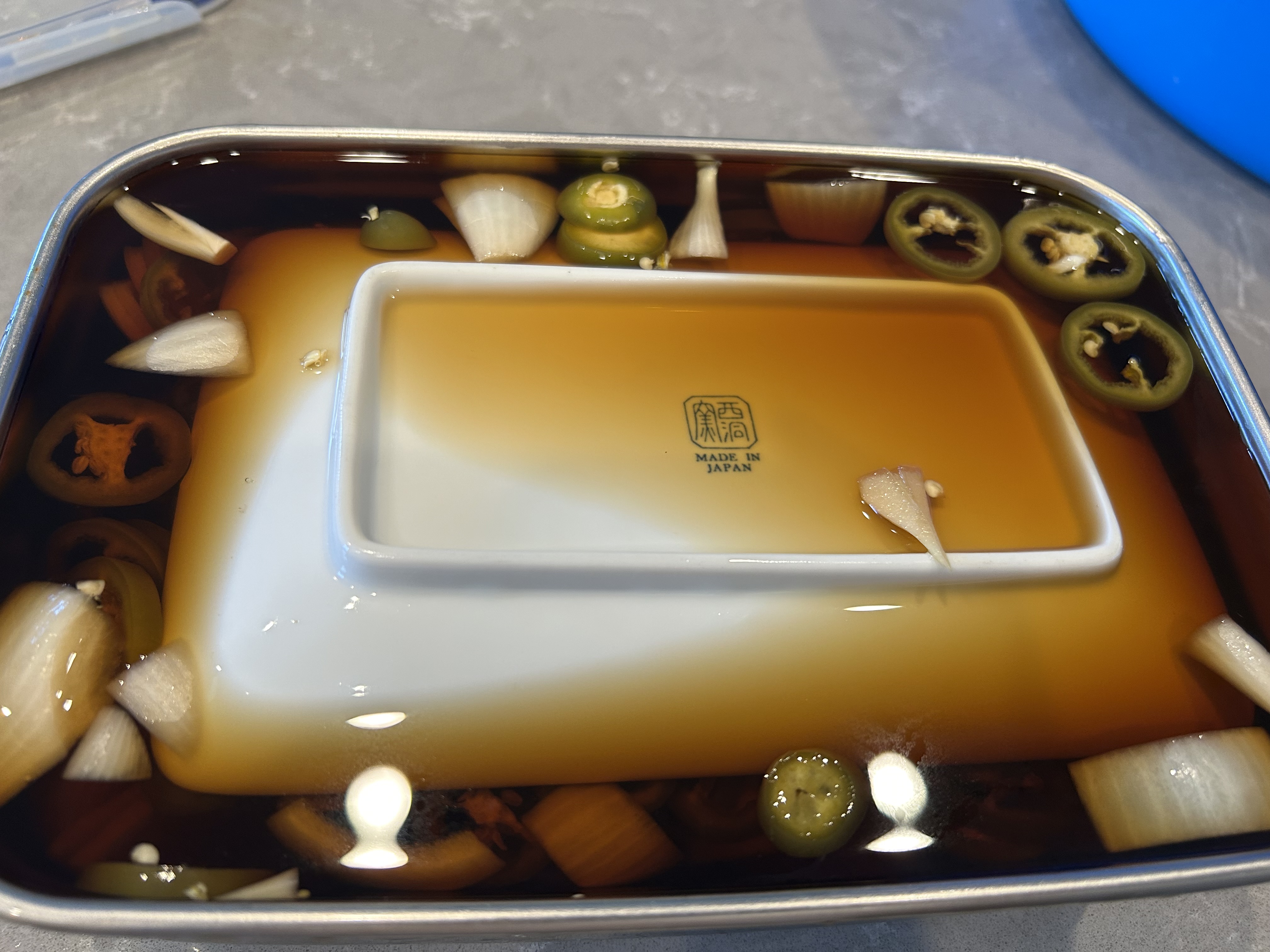
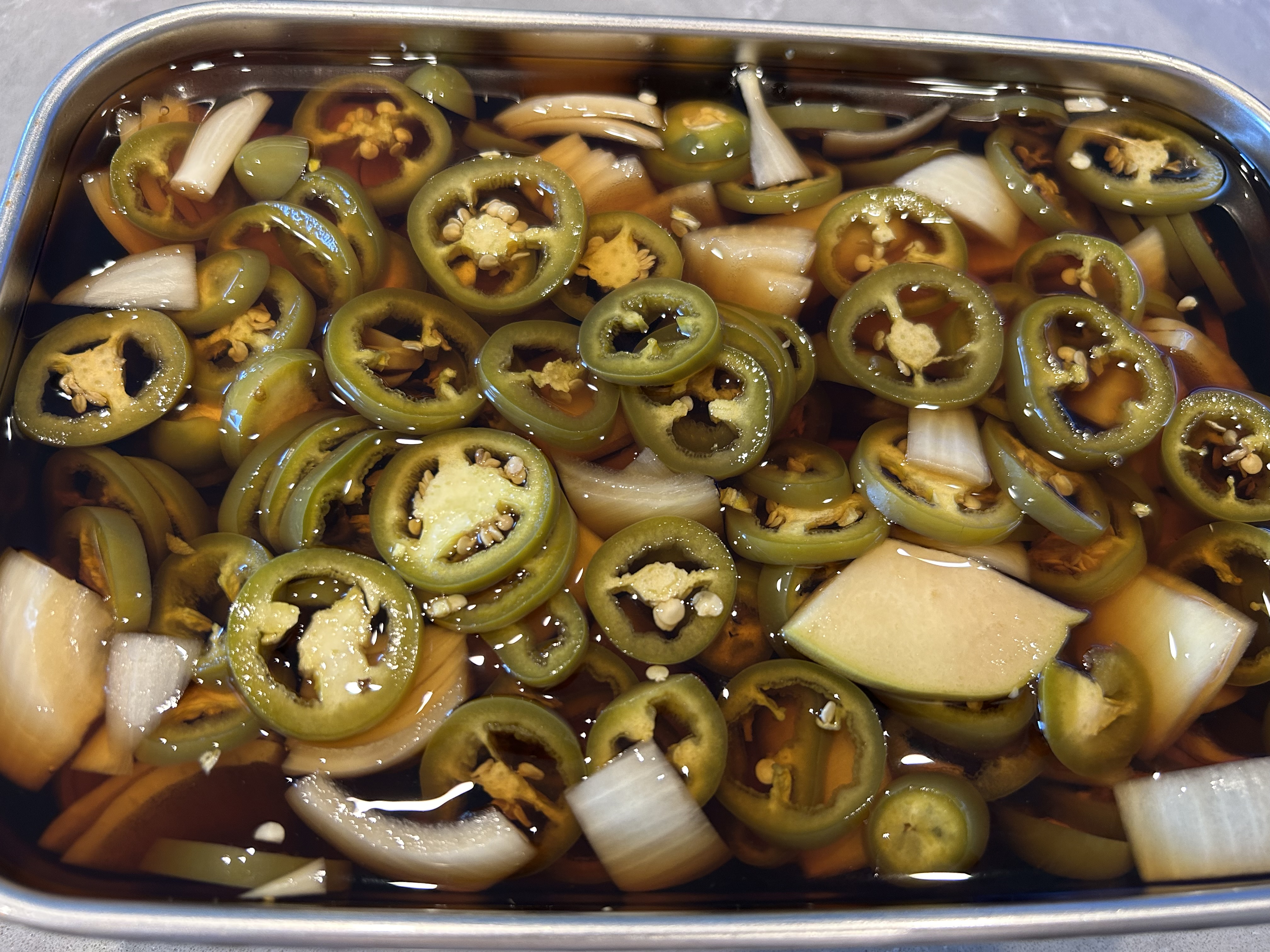
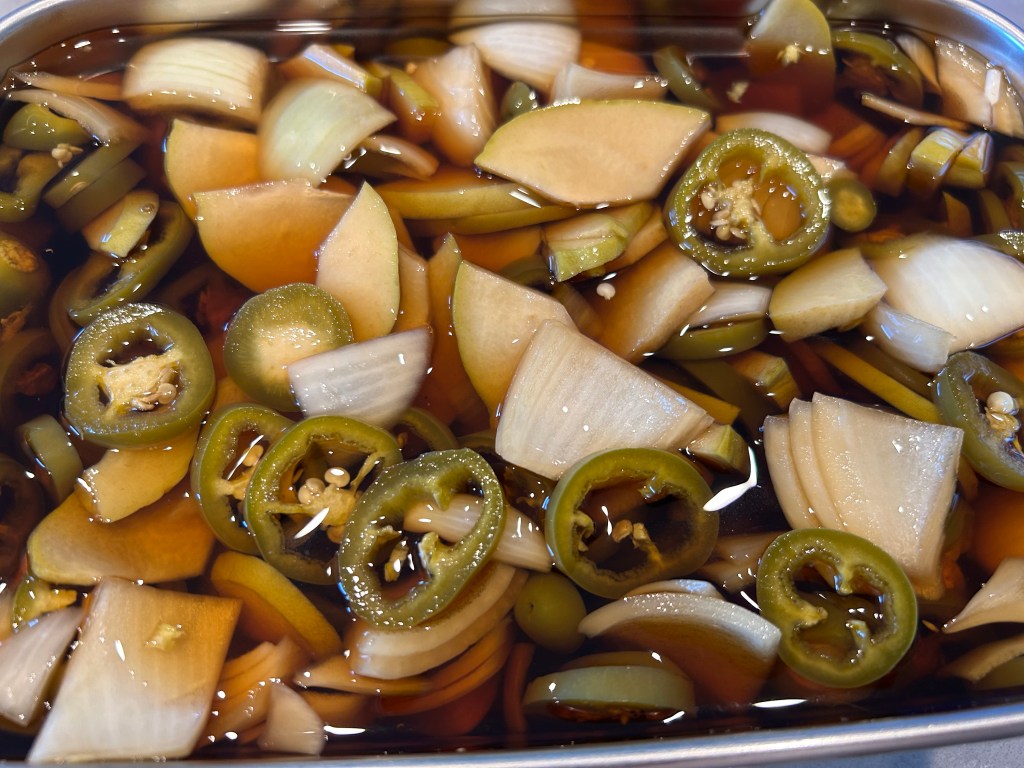
나중에 차요테의 국물은 전을 먹을 때 곁들여도 되고, 와사비를 섞어서 고기를 찍어먹는 장으로 사용하셔도 됩니다.
Later, you can use the leftover pickling liquid as a dipping sauce for jeon (Korean pancakes), or mix it with some wasabi to use as a dipping sauce for meat.
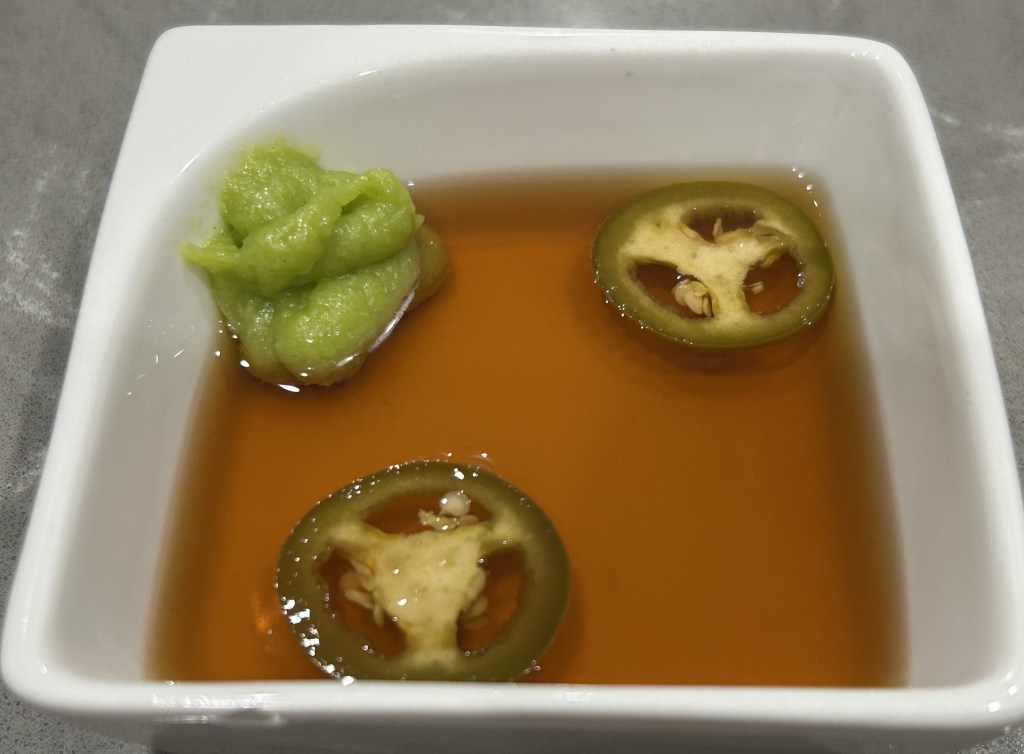
처음에는 과일의 한 종류인가 생각을 했지만 차요테에 대해 아는 것이 없어서 그냥 이런 것도 있구나 라고 생각만 했고 어느때에 알게 된 중국인으로부터 집에서 키운 차요테를 얻게 되면서, 볶음으로 먹으면 맛있다는 얘기를 듣게 되면서, 한국과 비슷한 박과의 한 종류로 생각했었습니다. 또 어느식당에서는 장아찌로 나오는 것을 보고 그때부터 반찬의 하나로 장아찌를 만들어 먹고 있습니다.
At first, I thought it might be a type of fruit, but since I knew nothing about it, I just figured, ‘Well, that’s a thing.’ Later, after receiving home-grown chayote from a Chinese acquaintance and hearing that it tastes great when stir-fried, I initially thought of it as a member of the gourd family, similar to Korean produce. It wasn’t until I saw it served as a pickle at a restaurant that I started making and enjoying it as a regular side dish.
장아찌를 담아보면서 무 장아찌와 비슷한데 맛은 다른 것 같습니다. 우리가 알고있는 무로 장아찌를 담그면 약간의 싱겁함이 있고 시간이 지나면 무가 물러지는 경우가 있는데 차요테는 무의 식감보다 아삭한 식감이 더 좋고, 아삭한 맛이 마지막까지 유지가되는 것 같고, 자체의 맛이 강하지 않고 순하기 때문에, 간장 베이스와 완벽한 맛의 조화를 가지며, 무엇보다 만들기가 쉬워서 누구에게 든 추천하고 싶은 반찬입니다.
While making these pickles, I noticed they are similar to radish pickles, but with a different charm. When you make pickles with regular radishes, they can sometimes turn out a bit bland, and over time, the radish can lose its crispness. In contrast, chayote offers a much better crunch than radish, and that crisp texture seems to hold up all the way to the end. Because its own flavor is mild and not overpowering, it pairs with the soy sauce base for a perfectly balanced taste. Above all, it is so easy to make that it’s a side dish I’d love to recommend to anyone.
고기로 이용한 모든 요리에 잘 어울리고 맛이 깔끔해서 기름진 입안을 깔끔하게 해주며, 고기 요리에 없어서는 안되는 반찬이고 볶음밥 종류에도 너무 도 잘 어울리는 장아찌 입니다.
It pairs wonderfully with any meat dish, cleansing your palate from the greasiness with its clean taste. It’s an absolute must-have side dish for meat, and it also goes incredibly well with any kind of fried rice.
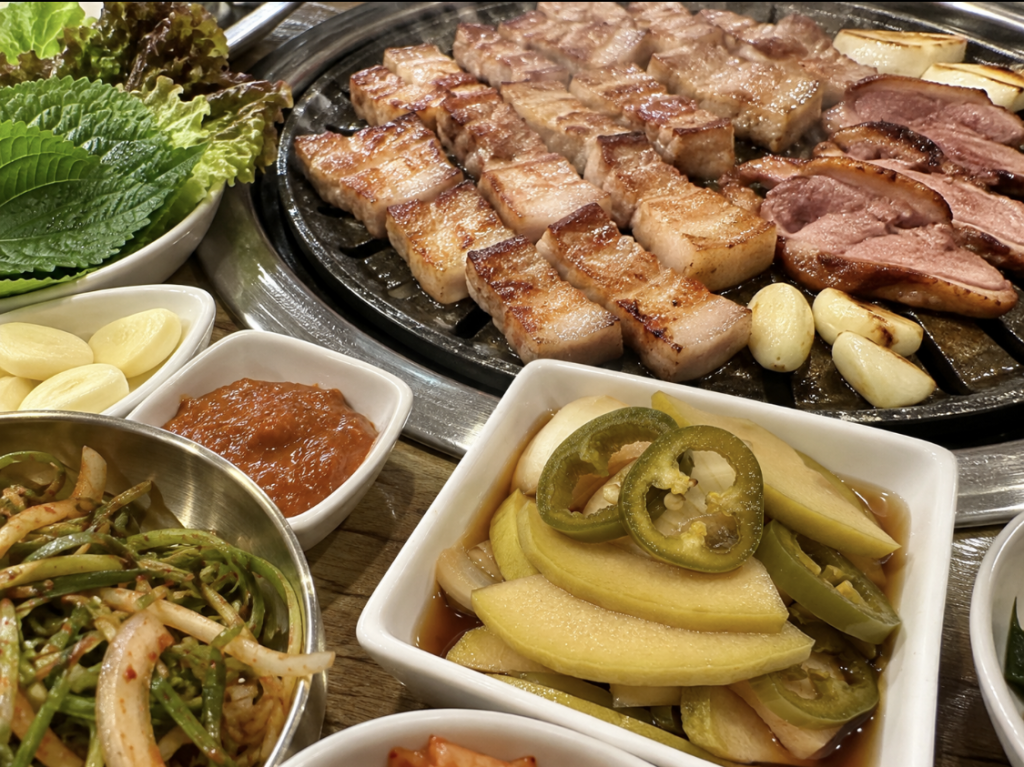
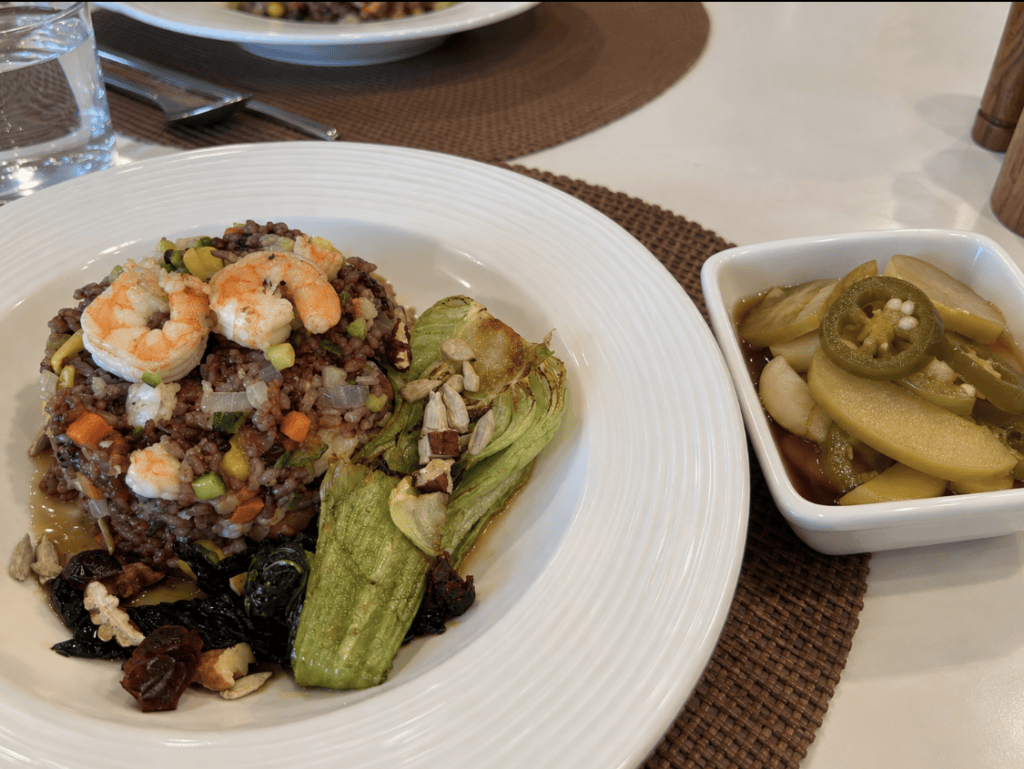
또한, 만들어서 하룻밤 정도 밖에 두었다 냉장고에 넣어 바로 먹을 수 있다는 점에서도 편리한 장아찌 입니다. 예전에는 중국마켓에서만 볼 수 있었는데 요즘은 이곳의 월 마트 슈퍼스토어 등에서도 살수있어 편하게 만들어 먹습니다.
Another great thing about this pickle is how convenient it is: you can leave it out at room temperature overnight, put it straight into the fridge, and enjoy it right away. While I used to only find them at Chinese supermarkets, nowadays I can easily pick them up at places like Walmart and Superstore, making it even more convenient to whip up a batch.
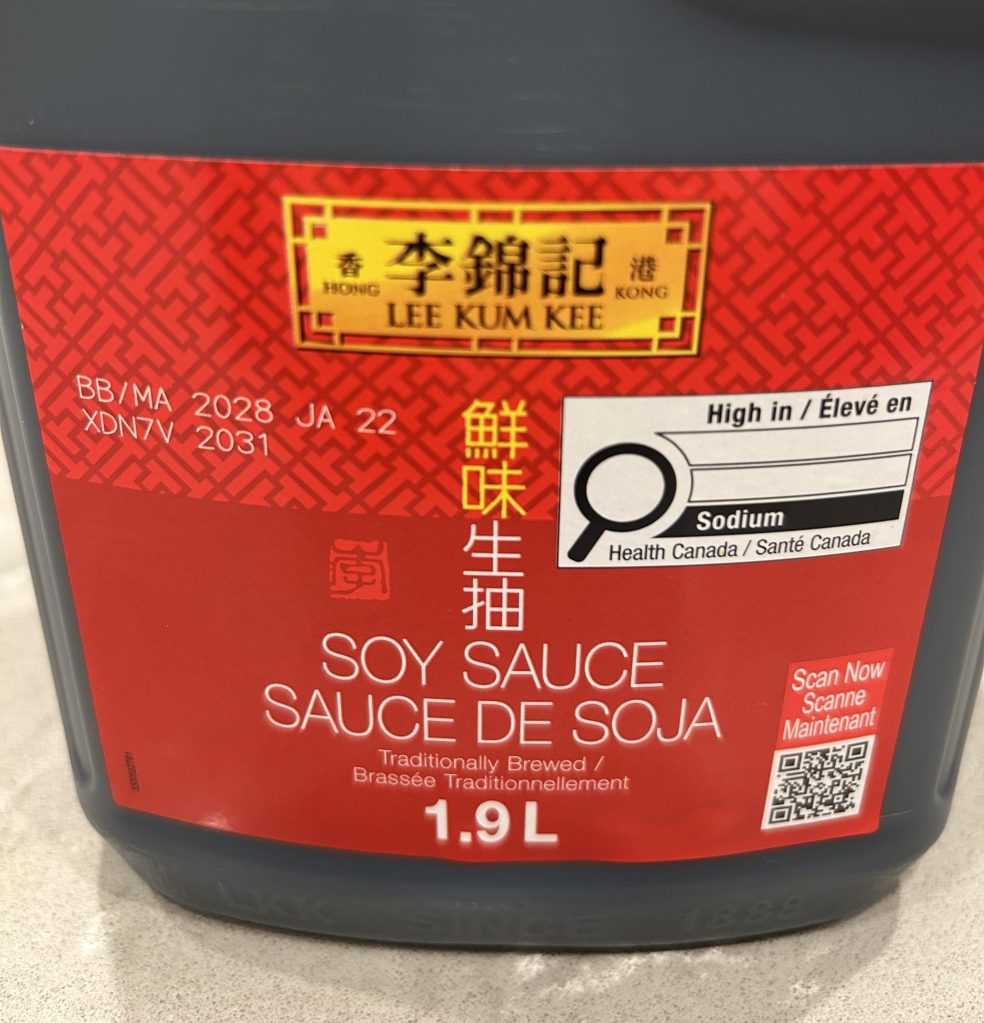
간장에 따라 색이 좀 달라지지만 맛은 완벽하게 어우려 집니다. 간장의 색이 연하면 조금 밝게, 색이 진하면 어둡게 절여집니다. 저는 이금기 간장을 사용했습니다. 한국의 진간장 보다는 색이 연하게 됩니다.
The color may vary slightly depending on the soy sauce used, but the flavors blend together perfectly. A lighter soy sauce will yield a slightly brighter color, while a darker one will result in a deeper hue. I used Lee Kum Kee soy sauce, which is lighter in color compared to Korean regular dark soy sauce.
처음에는 중국마트에서 볼수있어서 중국 원산지의 야채인줄 알았습니다.
“At first, because I saw it at a Chinese supermarket, I thought it was a vegetable native to China.”
차요테는 아즈텍 시대부터 재배되던 라틴아메리카 토종 작물입니다. 이후 전 세계로 퍼져나가면서 동남아시아, 중국, 일본 등지에서도 중요한 식재료로 자리 잡았다고 합니다. 차요테의 원산지는 중앙아메리카(특히 멕시코 지역)이지만, 중국을 비롯한 아시아 지역에서 매우 대중적으로 재배되고 소비되어서 중국 야채의 하나로 오해하기 쉽습니다. 저도 그렇게 알고 있었습니다.
Chayote is a native Latin American crop that has been cultivated since the Aztec era. As it spread around the world, it became an important ingredient in regions like Southeast Asia, China, and Japan. Although its origin is Central America—particularly Mexico—it is so widely cultivated and consumed across Asia, including China, that it is easy to mistake it for a Chinese vegetable. I used to think so, too.
차요테는 생으로 드셔도 괜찮습니다. 아삭아삭한 식감이 좋아 샐러드나 생채처럼 가볍게 무쳐 먹기도 합니다.
Chayote is also fine to eat raw. Thanks to its nice, crunchy texture, it is often enjoyed lightly tossed in salads or fresh raw vegetable dishes (saengchae).
다만, 간혹 약간의 아린 맛이나 떫은맛이 느껴질 수 있는데, 이는 박과 채소 특유의 성분 때문입니다. 박과 식물들이 외부 스트레스나 해충으로부터 자신을 보호하기 위해 스스로 만들어내는 대표적인 방어 물질인 쿠쿠르비타신 (Cucurbitacin /트리테르페노이드 계열)입니다. 이 성분이 쓴맛과 아린 맛을 내는 주원인이며, 식물이 자라거나 기후 변화 등의 스트레스를 받을 때 분비된다고 합니다.
However, you might occasionally notice a slight bitter or astringent taste, which is due to characteristics typical of cucurbit (gourd family) vegetables. This is caused by cucurbitacin (a type of triterpenoid), a primary defense compound that cucurbits produce on their own to protect themselves from external stress or pests. It is known to be the main culprit behind the bitterness and astringency, and is secreted when the plant experiences stress such as growth or climate changes.
손질할때도 만져지는 느낌이 있습니다. 손질할 때 껍질 부위에서 하얗고 끈적한 점액(수액)이 흘러나오는데, 이 속에 포함된 단백질 분해 효소나 수지 성분이 피부에 닿으면 순간적으로 떫거나 팽팽하게 쪼이는 듯한 촉감이 있습니다. 떫은 쪽이 더 가까운 것 같습니다.
You can also feel it when handling them. When prepping chayote, a white, sticky sap oozes from the skin. If the proteolytic enzymes or resin compounds in this sap touch your skin, it causes a momentary astringent or tight, puckering sensation—though it feels closer to astringency. I’m used to handling them now so it doesn’t bother me, but I definitely noticed it at first. Wearing gloves while prepping them is also recommended.
저는 오래 만져와서 괜찮은데 처음엔 느꼈습니다. 손질할 때 장갑을 사용하는 것도 추천 드립니다.
I’m used to handling them now so it doesn’t bother me, but I definitely noticed it at first. Wearing gloves while prepping them is also recommended.
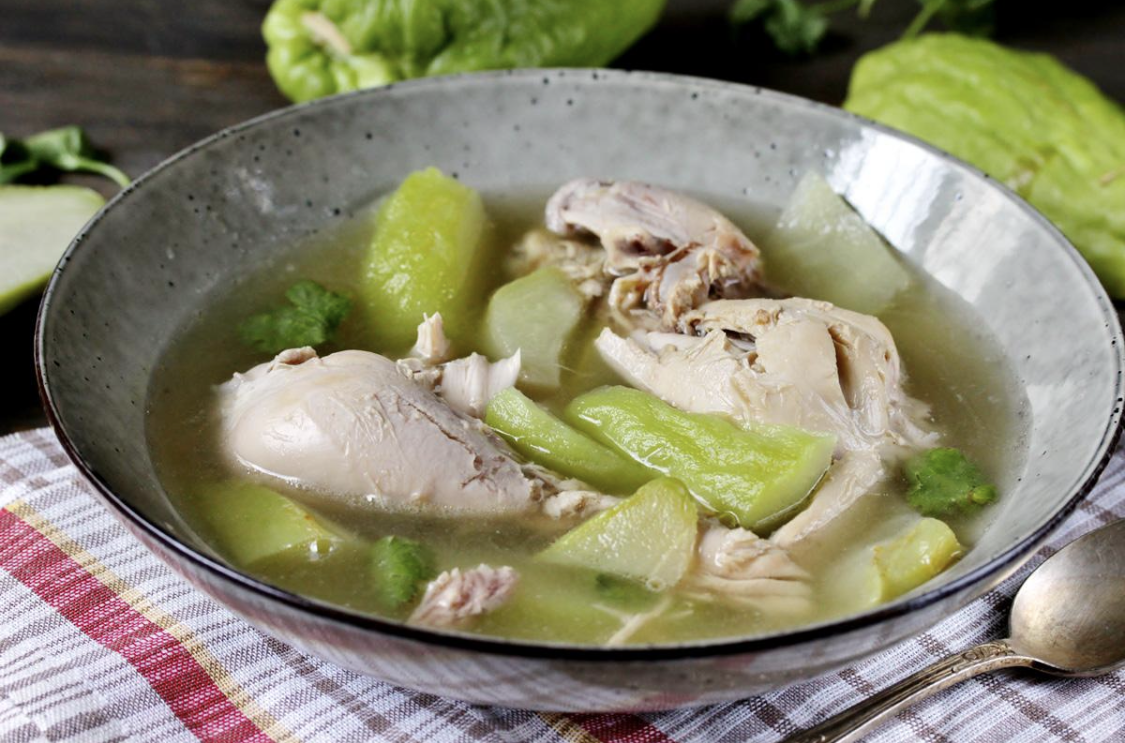
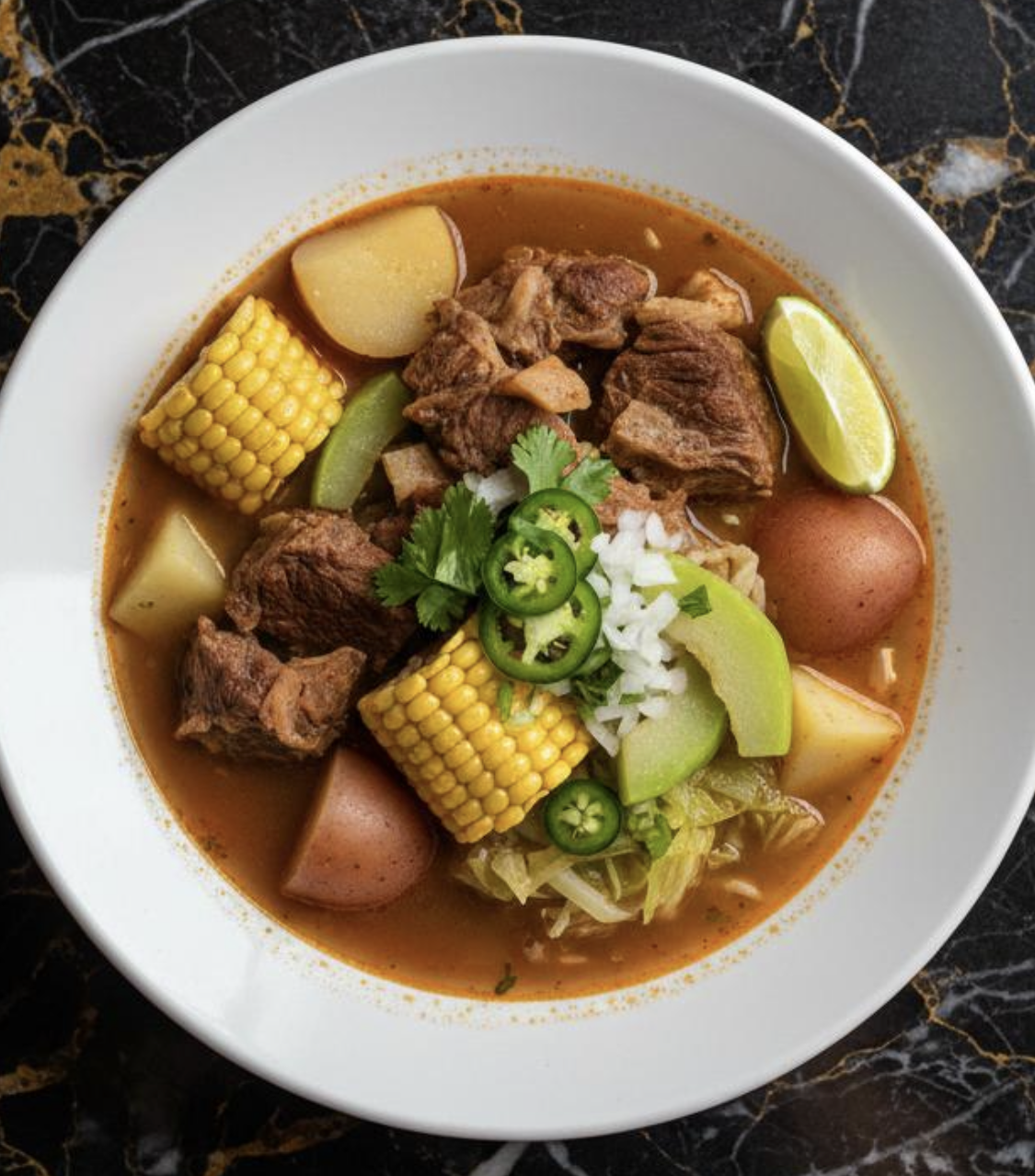
라틴아메리카(특히 원산지인 멕시코와 중남미 지역)에서는 차요테를 감자나 호박처럼 활용하여 정말 다양한 일상 요리에 넣어 먹습니다. 좋은 재료를 더 다양하게 만들어 보고 싶어서 찾아보았습니다.
In Latin America (especially in Mexico and Central and South America, its regions of origin), chayote is used just like potatoes or pumpkins in a wide variety of everyday dishes. Wanting to explore and prepare this great ingredient in more diverse ways, I looked into it.
스프와 스튜 (Caldos y Sopas): 멕시코 에서는 닭고기나 소고기를 넣은 맑은 국물 요리(칼도)에 큼직하게 썬 차요테를 감자나 당근처럼 푹 끓여 넣습니다. 끓이면 부드러우면서도 국물 맛이 은은하게 배어들어 아주 잘 어울린다고 합니다.
Soups and Stews (Caldos y Sopas): In Mexico, coarsely chopped chayote is simmered thoroughly—much like potatoes or carrots—in clear meat broths (caldos) containing chicken or beef. It is said to blend wonderfully, becoming tender while absorbing the subtle, savory flavors of the broth.
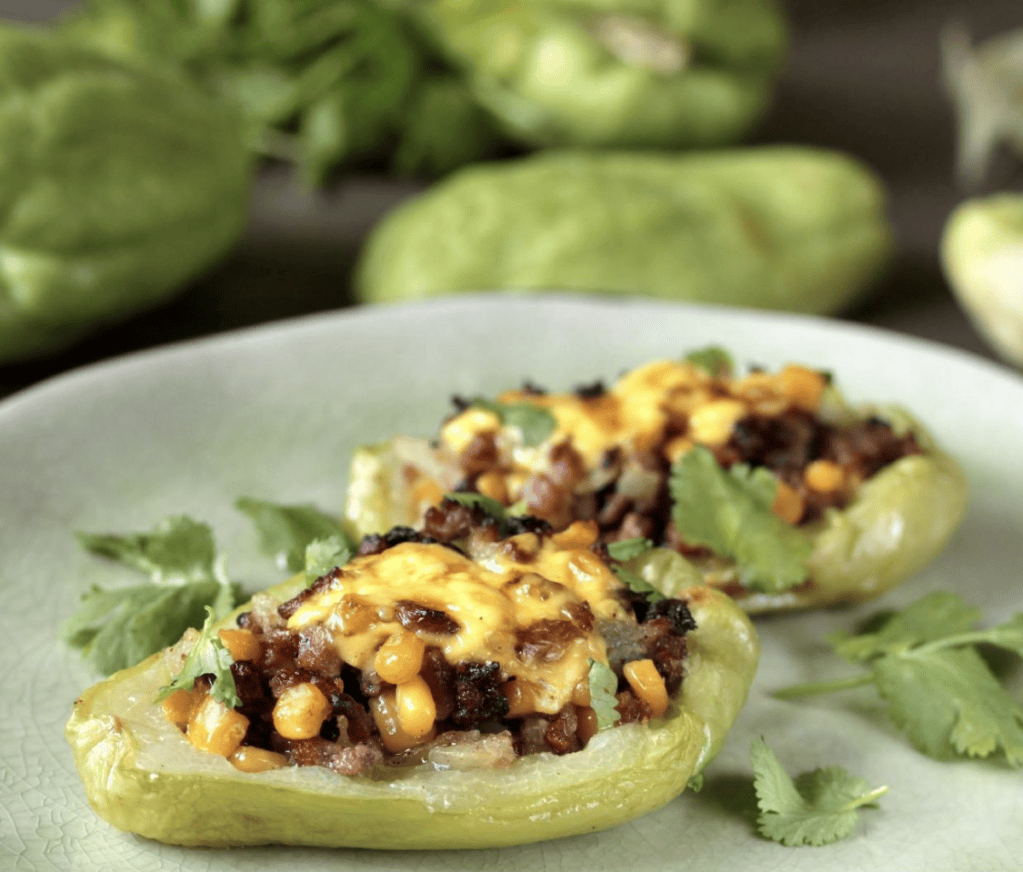
속을 채운 오븐 요리 (Rellenos): 차요테를 반으로 갈라 가운데 씨앗을 파낸 뒤, 다진 고기, 치즈, 양파, 토마토 등을 볶아 속을 채우고 오븐에 구워 먹는 전통 요리Chayotes Rellenos가 유명합니다.
Stuffed and Baked (Rellenos): A famous traditional dish is Chayotes Rellenos, where the chayote is cut in half, the core and seeds are scooped out, and the cavity is filled with a mixture of sautéed minced meat, cheese, onions, and tomatoes before being baked in the oven.
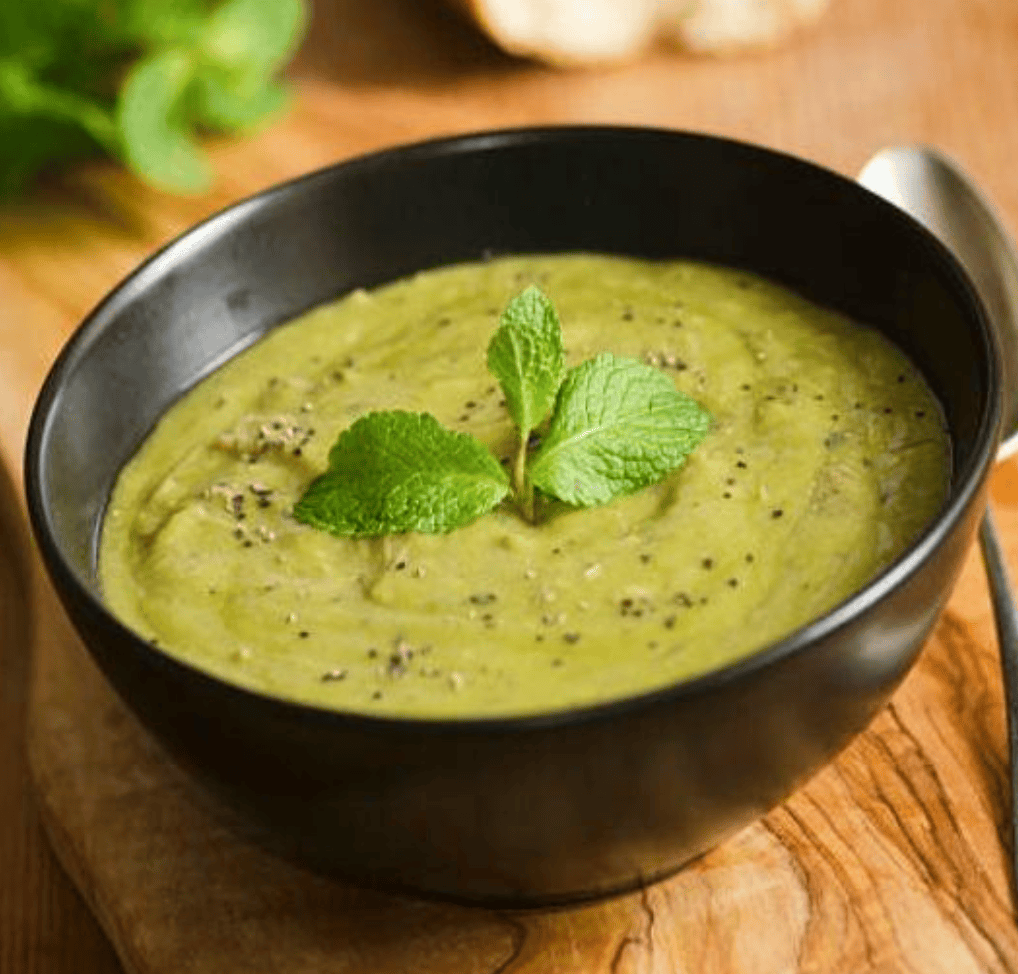
수프와 퓌레 (Crema de Chayote): 차요테를 삶아 부드럽게 갈아낸 뒤 크림이나 치즈를 더해 고소하고 부드러운 수프로 즐기기도 합니다.
Soups and Purees (Crema de Chayote): Chayote is boiled and blended smoothly, then enriched with cream or cheese to create a rich, creamy, and comforting soup.
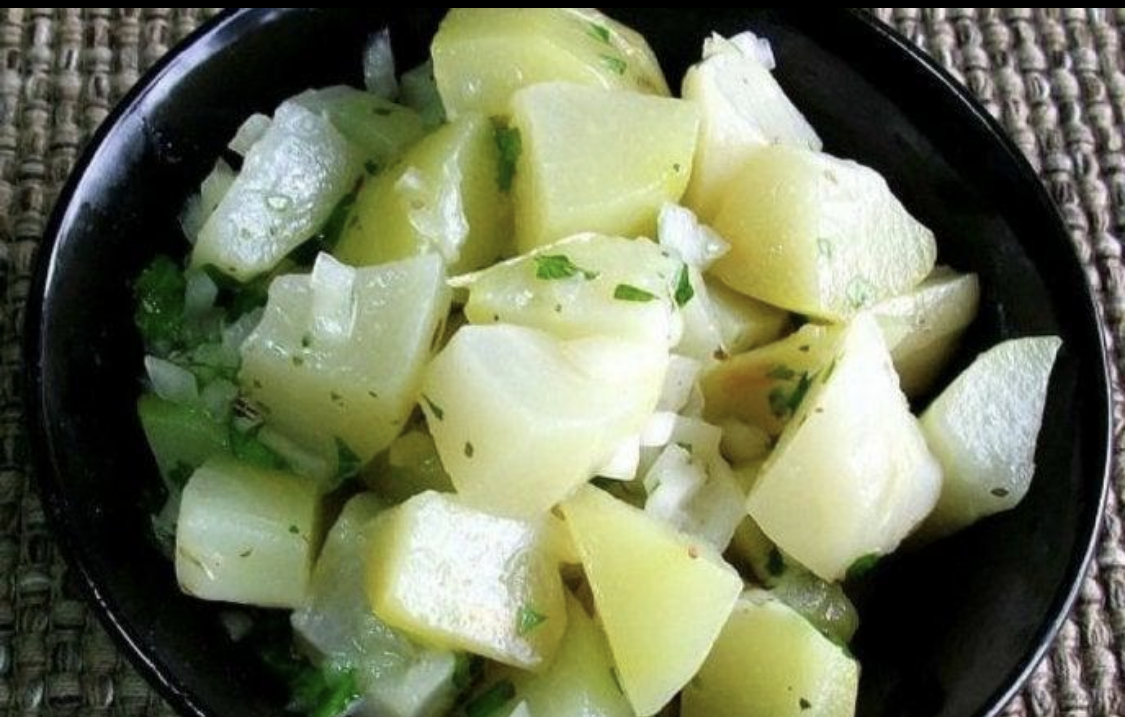
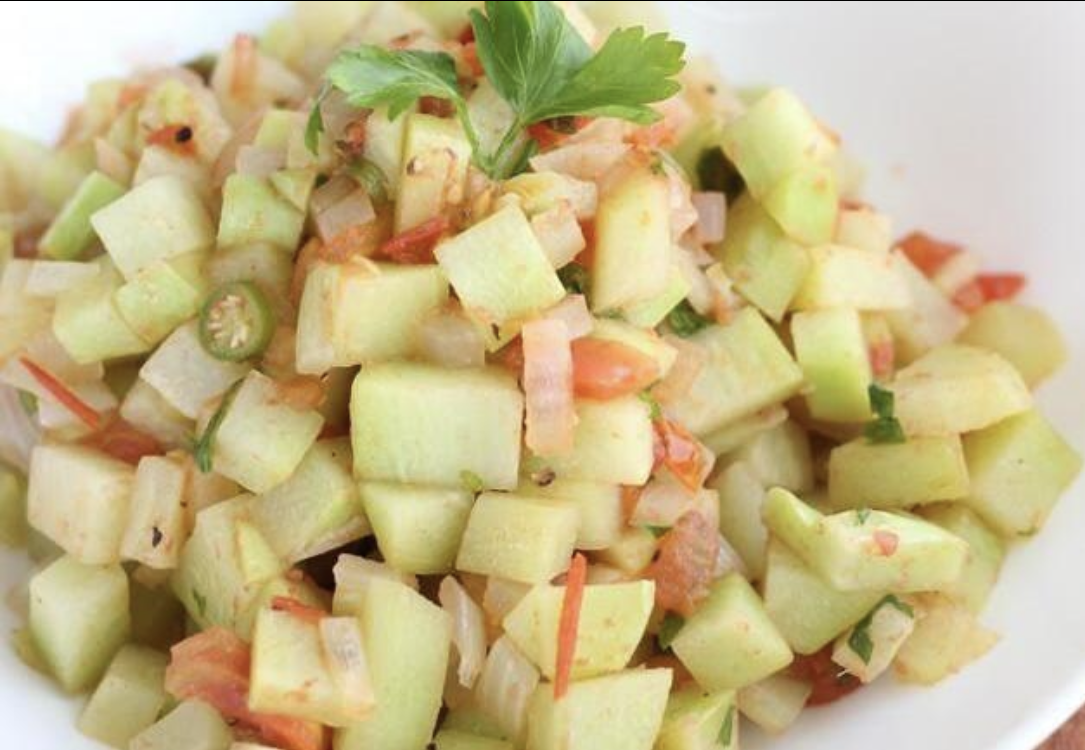
볶음 및 샐러드 (Salteados y Ensaladas): 얇게 썰거나 채 썰어서 양파, 고추, 토마토 등과 함께 타코 속재료로 볶아 먹거나, 살짝 데쳐서 상큼한 라임 소스와 버무려 샐러드로 먹습니다.
Stir-fries and Salads (Salteados y Ensaladas): Thinly sliced or julienned chayote can be stir-fried with onions, peppers, and tomatoes as a taco filling, or lightly blanched and tossed with a refreshing lime dressing for a salad.
미국 루이지애나, 특히 뉴올리언스 지역에서는 차요테 (Chayote)를 미를리톤(Mirliton)이라고 부릅니다.
In southern Louisiana, especially around New Orleans, chayote is known as mirliton.
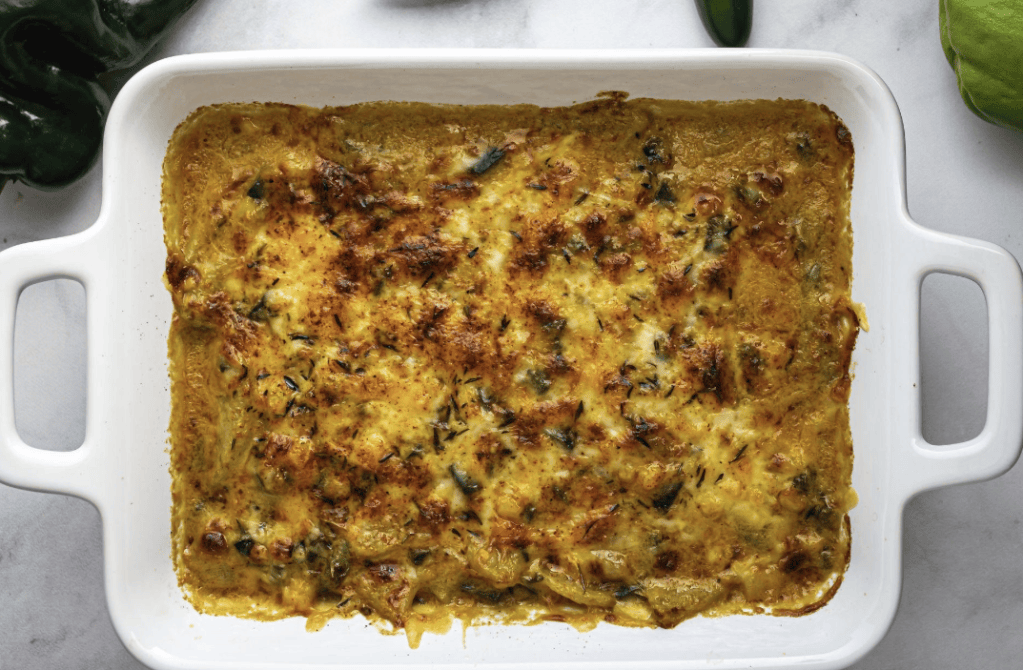
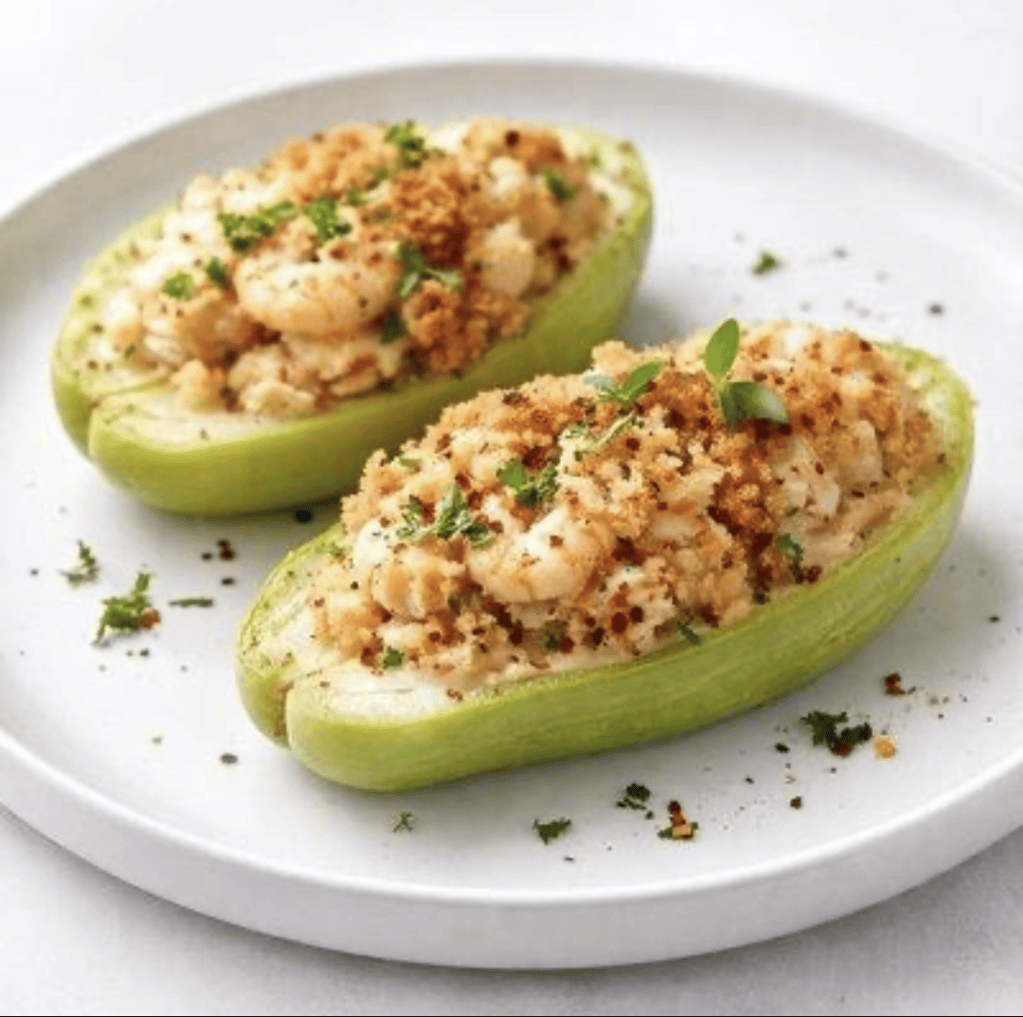
미를리톤 캐서롤 (Mirliton Casserole)이란 요리는 차요테를 잘게 썰거나 으깬 뒤, 새우,양파, 샐러리, 피망 등의 야채를 섞어 큰 베이킹접시에 담고 위에 빵가루를 뿌려 오븐에 노릇하게 굽는 루이지애나식 요리가 있습니다.
Mirliton Casserole: This is a Louisiana-style dish where finely chopped or mashed chayote is mixed with vegetables like shrimp, onions, celery, and bell peppers, placed in a large baking dish, topped with breadcrumbs, and baked in the oven until golden brown.
또한, 멕시코의 Chayotes Rellenos 요리처럼 루이지애나식 요리중에 Shrimp-Stuffed Mirliton(쉬림프 스터프트 미들리톤)요리는 차요테를 반으로 갈라 새우, 차요테 속살, 양파, 셀러리, 피망 빵가루 등으로 속을 채워 구운 요리도 있습니다.
Also, much like the Mexican dish Chayotes Rellenos, there is a Louisiana-style recipe called Shrimp-Stuffed Mirliton, where the chayote is cut in half and baked with a filling made of shrimp, scooped chayote flesh, onions, celery, bell peppers, breadcrumbs, and more.
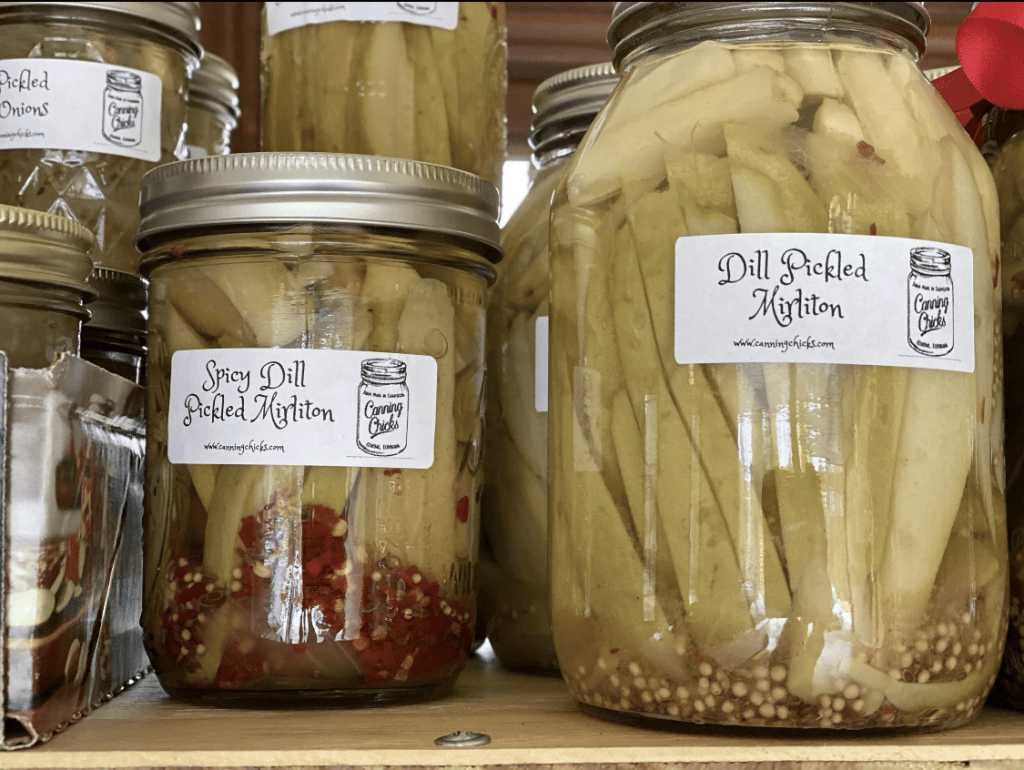
간장 베이스의 장아찌가 아닌 피클로 담아서 사용하기도 합니다.
Instead of soy sauce-based jangajji, they are sometimes prepared and enjoyed as regular vinegar pickles as well.
차요테는 과육자체가 단단하면서도 수분이 많아 끓이거나 볶거나 오븐에 굽는 등 거의 모든 조리법에 잘 어울리는 식 재료 입니다. 장아찌 만으로도 충분히 만족했던 맛 이였는데 좀 더 다양하게 만들어 봐야겠습니다.
With its firm yet juicy flesh, chayote is an incredibly versatile ingredient that pairs well with almost any cooking method—whether boiled, stir-fried, or baked in the oven. The jangajji alone was already more than satisfying, but it definitely makes me want to try preparing it in even more diverse ways.

Leave a Reply